Welcome to Part 4 of 5, of My Top 50 Final Fantasy Locations listing. Sorry I didn't post this yesterday, I had completely forgotten to do so!
We're approaching crunch time now. These places before you are places in the Final Fantasy series that are absolutely amazing, in a variety of different ways. Today I count from #20 to #11, if you've missed them click here for #30 to #21, here for #40 to #31 and here for #50 to #41. Let's do the Top 20!
Please note: This list will talk about
spoilers. If you have not played the game that each location represents
I'd avoid that entry.
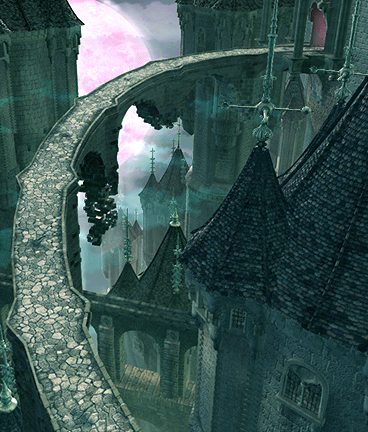
#20: Giruvegan Game? Final Fantasy XII When do you go? Towards the end of the game Revisitable? Yes Description: An ancient city, completely out of vision due to large quantities of Mist covering the place. It's completely indoors and is basically a large pit, and at the bottom is The Great Crystal. However this pit is in darkness, and has many lights and designs that bright up in its black surroundings.
I don't know if it's just me; no one else really talks about it, but I find Giruvegan absolutely stunning to look at. I remember playing hours and hours of Final Fantasy XII, boring as hell as it is at times (Don't deny it, FF12 can be boring for long periods of time) and then getting to Giruvegan and just being taken aback by its beauty. Just panning the camera across the terrain, looking at its darkness, its lights, and I had to take a moment to take it all in. It's just damn beautiful. The Great Crystal is pretty cool too, but when you enter Giruvegan, seriously, look around you. Look at what you can see. You'll appreciate it. For some reason not many people talk about this place as much as me, which is a damn shame as it deserves a big mention for being as awesome as it is, in my eyes anyway.
Giruvegan is the fourth and last entry from Final Fantasy XII in this list.
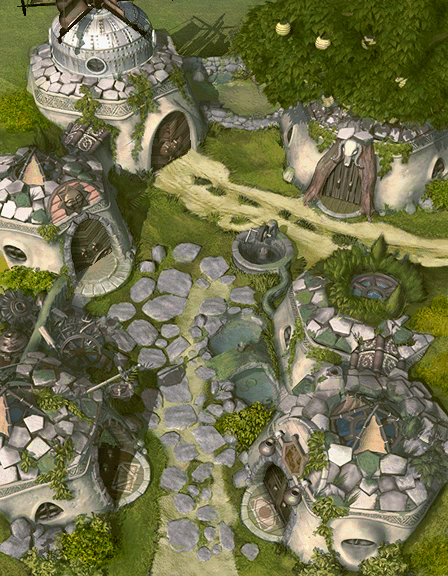
#19: Dali Game? Final Fantasy IX When do you go? Very early on Revisitable? Yes Description:
A very small village, which its main landmark is its windmill. It looks like an ordinary village with normal villagers, but underneath the surface all the men in the village are producing a Black Mage Army for Queen Brahne to use to take over the Mist Continent.
I love Dali. It's such a cute little place, and the first place that seems to make Vivi even remotely happy, until of course, he's mistaken for one of the Black Mages that are being made for war. Vivi loves windmills. What makes Dali so amazing is its lovely music; it's so nice and warming, you wish music like that was played in your house when you go home. Well I do anyway. And I really wish in a certain way the horrible things that do end up happening in Dali never happen, as it's just such a nice little place. But this is Final Fantasy after all, so it would have been wrong if every thing was nice and perfect here. Man, I love Dali.
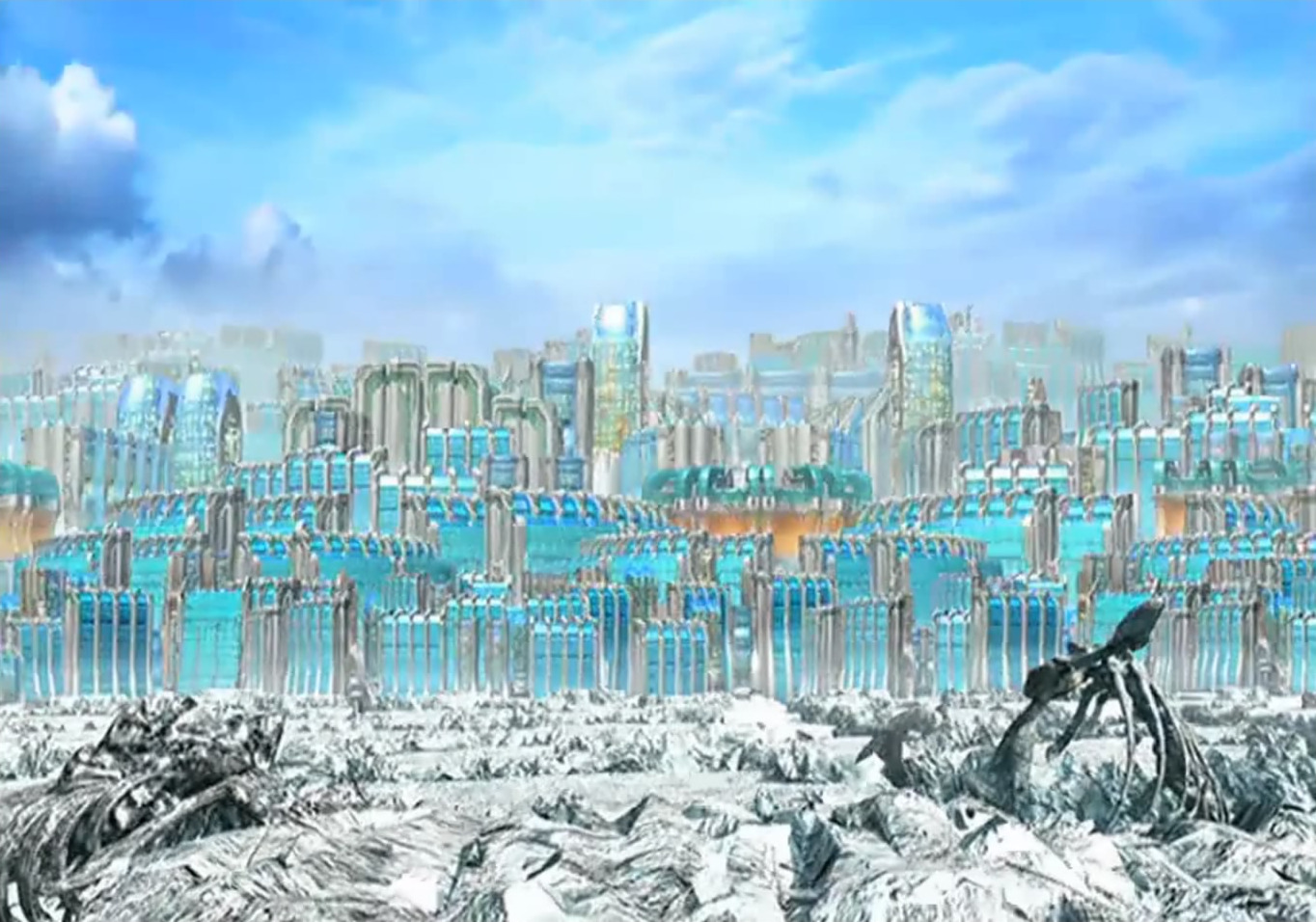
#18: Esthar City Game? Final Fantasy VIII When do you go? Completely optional, from half way through the game onwards Revisitable? Yes Description: Possibly the biggest, highest technological city in the history of Final Fantasy. A monstrosity of a city filled with large blue buildings, super fast cars and large surface roads.
What's the opposite to Dali? Probably Esthar. Remember I said earlier that Rabanastre to scale is possibly one of the biggest places in all of Final Fantasy? Well this, I'm almost certain, is the king. Esthar is just a beast. It covers such a large area, I've never seen an area in a Final Fantasy world map cover such a large patch. Just look at it! It's big and blue! So big. It's got to be bigger than Rabanastre, than Eden, than Zanarkand, than Midgar. It's just untouchable. And it also has the coolest president in the history of Final Fantasy too, in Laguna. You just can't beat Esthar.
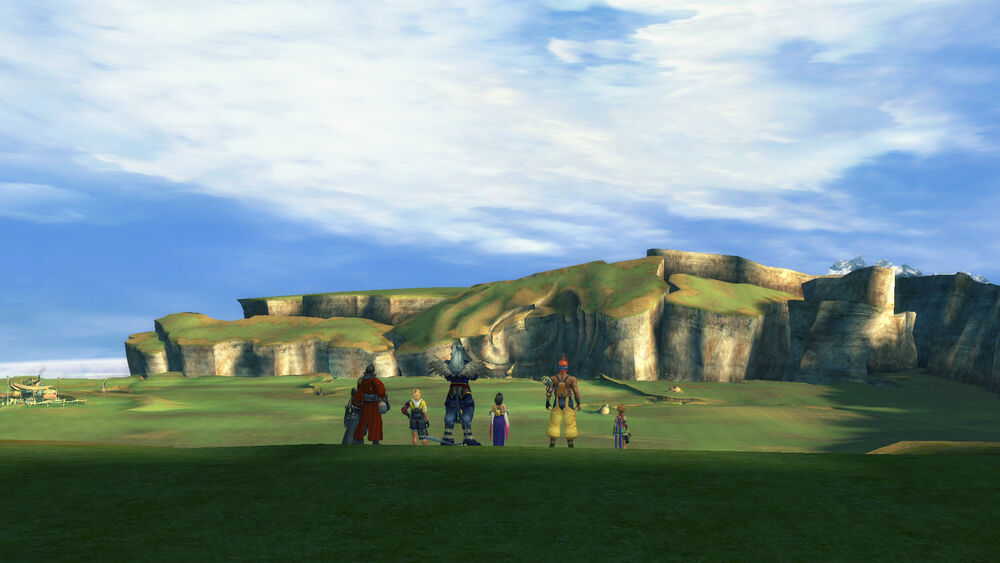
#17: Calm Lands Game? Final Fantasy X When do you go? Approaching the end of the game Revisitable? Yes Description: A huge plain of grass that's usually used as a place of celebration for the world of Spira for when Sin is defeated. It has an iconic 'scar' towards the end of the plain where Sin fell in a climatic battle with one of the Final Aeons many years ago.
The Calm Lands may not look like much but it says something that they made the Archylte Steppe after it, only three games after the original. Its concept is simple yet effective, it marks the beginning of the end of the story of Final Fantasy X. The Archylte Steppe's purpose is pretty much the same for FF13. But you can do so much here; you can grind your characters abilities well here, you have a lot of side quests that stem from here, amongst other things. You come to the Calm Lands in the story only once, but chances are you'll spend a lot of time here as it has such a good purpose and is so big, that there's so much to do. It's a truly grand Final Fantasy location.
Calm Lands is the fifth and last entry from Final Fantasy X in this list.
#16: Memoria Game? Final Fantasy IX When do you go? Final dungeon (unless you count The Crystal World seperately, then it's the penultimate location) Revisitable? Yes (when retreating from The Crystal World anyway) Description:
A load of locations meshed into one, formed from the memories of all the characters, and that of time itself.
Memoria is one of my favourite final dungeons. I see it as the final dungeon of Final Fantasy IX, the Crystal World is so short it's hardly a dungeon is it? Memoria is an amazing place. I love the fact that you have this amazing story of Final Fantasy IX, that all of the characters take part in, all of the locations, the dreams, the experiences, everything, and it's all meshed into one location at the end. You have some very significant places in Memoria, some that you will recognise instantly, others are quite discrete. It's a fascinating area and I love it.
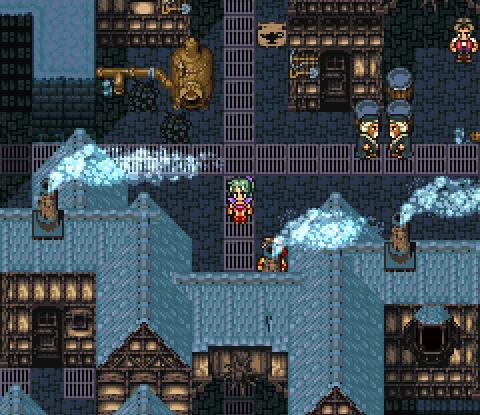
#15: Narshe Game? Final Fantasy VI When do you go? Right at the beginning and a little later on Revisitable? Yes Description: A coal mining town, trying to maintain neutrality in the game's tensions between the Empire and the Resistance, but leans towards the latter discretely. An esper is discovered here and its appearance sparks the beginning of the game.
Narshe will always hold a strong place in my heart, it all begins here and it's a cool little town. As Final Fantasy VI towns go they don't look that great, primarily because the graphics weren't as good back then, but Narshe's blue roofed buildings make it stand out more than the others. All of the steam coming out from the chimneys, and the coal mine to boot, it's distinct in the context of the game. You can come back here in the World of Ruin but it's just lifeless, which I suppose is fitting of the time of the game when its in utter chaos. Either way Narshe is a cool little place, and if you ask anyone who has played Final Fantasy VI, chances are they'll agree with me.
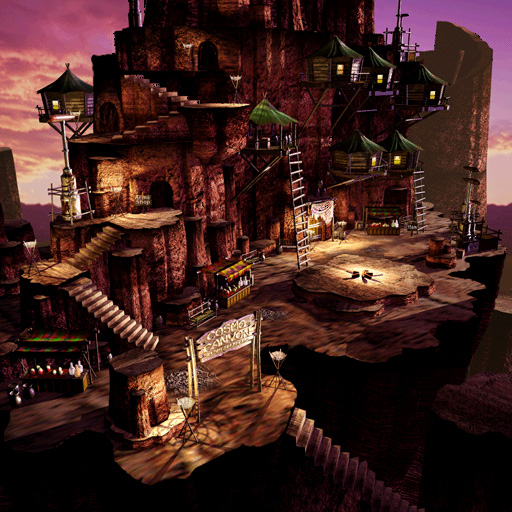
#14: Cosmo Canyon Game? Final Fantasy VII When do you go? Towards the middle of the game and towards the end of the game Revisitable? Yes Description: A pilgrimage site for those who seek to learn about The Planet and its cycle, it's also the hometown of Red XIII and his 'grandfather', Bugenhagen.
Want to know if someone actually is legitimately someone who likes Final Fantasy VII? Ask them about Cosmo Canyon. Lots of things get mentioned about FF7, the death of Aerith, One Winged Angel, Cloud's spiky hair, but nearly all the true FF7 fans know and love Cosmo Canyon. And what do proper FF7 fans love more than Cosmo Canyon? The amazing theme for Cosmo Canyon! What a song. That being said Cosmo Canyon is so cool, the storyline progression that happens here is so cool too, and most importantly, Buganhagen is too cool. That man is just a legend. Cosmo Canyon is not a place that I'd like to live if I could, but would I love to visit here if possible? You damned right.
#13: Oerba Game? Final Fantasy XIII When do you go? Very late on in the game Revisitable? Yes Description: What was once Vanille and Fang's hometown, described by them as a lovely place to go to, is now a dead, desolate abandoned village. Oerba is so lifeless that it snows crystal dust.
I admit, even playing Final Fantasy XIII as an adult, I bought into Vanille and Fang's story that on the other side of Gran Pulse would be a bustling town full of people to greet and welcome the two best friends home. I was naive. I should have expected Square-Enix to dash the character's hopes of returning to the place they called home and make it horrible. But I never did. And when I saw Oerba, my heart sunk. It's horrible. It's an absolutely horrible place. WHY SQUARE-ENIX WHY?! WHY DO THAT?! It's so mean! Oerba is an amazing place, it's what Zanarkand should have been really. Yes I think they did a better job of Oerba than they did Zanarkand. Oerba is so dead, so lacking in anything that it even snows crystal dust. That's just horrible. But under all that horribleness is what was once a town. I think that's the hardest bit. The fact that you can see pretty much everything in its natural state, just rotting. It's not destroyed by a fire or sucked up, or a pile of rubble. It's like everyone just... disappeared. I love what Square-Enix did to Oerba, love and hate it. It's an amazing place.
Oerba is the eighth and last entry from Final Fantasy XIII in this list.
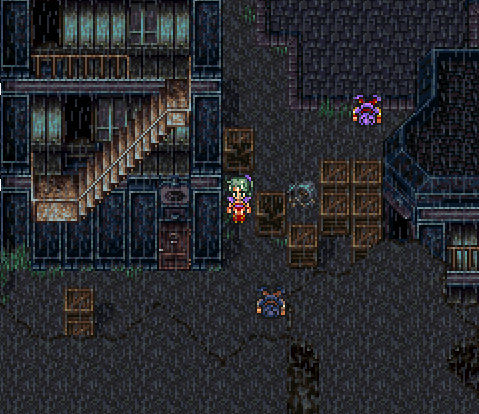
#12: Zozo Game? Final Fantasy VI When do you go? Towards the middle of the game Revisitable? Yes Description: A town that's completely overrun by thieves and criminals. One of the few places in the entire series where it permanently rains. Everyone in the town are incapable of telling the truth and random encounters happen everywhere, a rarity for a Final Fantasy town.
As horrible a place Zozo is, it's also pretty damn cool. I love coming to Zozo, even the random battles don't bother me. I think it's the music again. Music is so important in a video game as it really sets the tone. I love the fact that everyone lies here, it makes for an interesting experience. I don't really know what else to say other than I love Zozo.
#11: Conde Petie Game? Final Fantasy IX When do you go? Half way through the game Revisitable? Yes, until it is blocked off by Iifa Tree roots when Mist surrounds all over Gaia Description: The village of the dwarven race. A single building across two of Iifa Tree roots, it's a passage from the Black Mage Village to Madain Sari and the Iifa Tree itself.
I can describe this place in a single word - Rally-ho! Rally-ho! Rally-ho! I love this place. It's such a brief blip that you actually spend here, but in that time the amount of comedy Squaresoft stirred up is just magical. I love the dwarves, who refuse to let you in unless you say Rally-ho!, I love their way of speech, which is almost spelt like how people in Scotland speak, I love the fact that the only way to get to the other side of the village is by getting married, and how Zidane reacts when Dagger agrees, and I love the fact that Quina doesn't understand the logic of having to buy food. But the best moment in the 15 minutes you spend here is the option of getting Vivi and Quina married. It's just one of the funniest moments in Final Fantasy history. I mean it. It's just classic. I so happy...
And we've arrived at the Top 10. I hope you've been enjoying going through these locations with me. I've enjoyed writing about them that's for sure. One more part left to go. What will I crown #1 in my favourite locations of the Final Fantasy series? Find out tomorrow. Have a good night!
Overall,
Final Fantasy 13 is a great game with a complex yet rewarding storyline and an awesome battle system.
Final Fantasy XIII was released nearly two years ago here in
the UK, in March 2010, and was released on both the Xbox 360 and the
Playstation 3. It is naturally, the thirteenth major chapter in the critically
and commercially successful Final Fantasy series. The game’s official sequel,
Final Fantasy XIII-2, is to be released next month.
Just in case you’re not too familiar with the series, Final
Fantasy games have been released since 1987, twenty five years ago, and are a
set of RPG games that have for long periods of time become the most influential
and widely celebrated role playing games of all time. Many recurring themes in
the series are the using of magic and summoning monsters, the use of airships,
travelling across a world, characters dealing with love or loss, characters
defying the powers of fate, religion or apocalyptic circumstances and the
inclusion of chocobos and moogles, two creatures the game series has made
popular. The highest point in the series was arguably the release of Final
Fantasy VII in 1997, which was released on the Playstation, which was met to
universal acclaim and has sold more than any other game in the series, at over 10
million copies and is only second to Gran Turismo on the console. Since then
the sales and reception of the Final Fantasy series has changed; some games
sold more than others and some games were better received. Final Fantasy XI
marks the first online RPG in the series, and was followed up by last year’s
release of Final Fantasy XIV.
Final Fantasy XIII follows Final Fantasy XII (that being
said, none of the major games are connected officially and are set in their own
styles and game universes), which was met with a decent response, with the main
criticism coming from the fact that the world was expanded across an immense
terrain with in some cases very little linear direction and large amounts of
battles followed by short spurts of storyline progression. What did Square-Enix
do with Final Fantasy XIII in response to these criticisms?
"He's behind you!" Ah... I love pantomimes.
FF13 (I’ll now abbreviate to numerals) in comparison to FF12
does exactly the opposite in terms of the world terrain and linearity. The game
is linear, to the point that you cannot travel back to previous areas at all,
nor is there varied places to explore in each area. The game, it feels, almost
holds your hand throughout your journey, which is completely different to FF12,
a world where you can go to so many areas so early in the game, even if the
storylines don’t require you to go there. FF12 and FF13 are complete opposites
in terms of how the rails of the story go; FF13 glues your hands to the rail
where as FF12 shatters the rail completely.
Moving onto the story, before I explain what the plot is,
I’d like to just say that the storyline is very confusing and hard to follow
first time round. It doesn’t help when you’ve entered a game in a fantasy world
that uses three different terms in fal’Cie, l’Cie and Cie’th all the time and
you barely have time to digest the terms and learn their meanings. It confuses
the plot from the off and it makes the story hard to follow at times, unless
you click straight away, something I personally didn’t do on my first run. The
second run through the game was a lot easier mind, and the story on this run
was much better to follow.
The story follows the theme of fate, and how these six
playable characters are chosen as servants of the fal’Cie, the game’s
equivalent of gods, to complete a task (called a ‘focus’) to destroy the world,
and how if they fail in their task, they’ll turn into grotesque monsters
(‘called Cie’th’). If they succeed and complete their ‘focus’ their fate is
potentially just as bad, as they will be granted crystal stasis, for as long as
eternity. The name given to these servants is the ‘l’Cie’, and they are capable
of using magic, and therefore the general citizens of the land of Cocoon are
afraid of them. It’s a harsh fate that is given to these six individuals, and
it takes them all on an emotional journey of deciding to give up on their task,
to embrace their task, to run away from it and try to shake it off, or try
even, defying it. It’s a great storyline once you understand it, one of the
best storylines in recent Final Fantasy titles in my opinion, and one I’ve
enjoyed more than any storyline since FF9.
These six characters naturally all have different
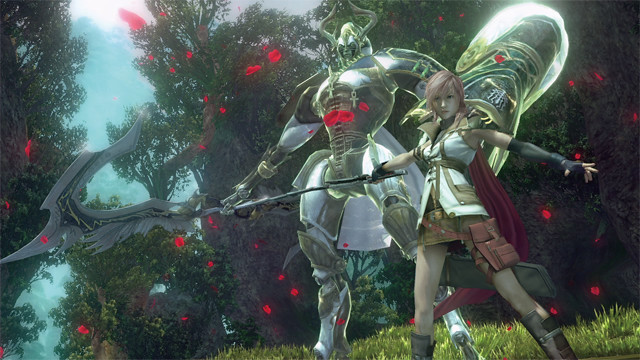
personalities and views on their situation. The main protagonist is Lightning,
who’s sister Serah became a ‘l’Cie’ before the game begins, and at the start of
the game turns into crystal stasis, having completing a focus that is unknown
in task. Lightning, an ex-soldier, is seen as a very harsh character whose upbringing makes her take a bold and frank approach to these dire circumstances and often has
the party she accompanies upset. Serah’s boyfriend, Snow, also is a main
character, and only met Lightning days before the game starts and had a frosty
reception from the ex-soldier, which leads to Snow often, get the brunt of Lightning’s
frustrations. Snow himself, sees himself as a hero of Cocoon and uses his large
stature and loud voice to carry him through his troubles of losing his
girlfriend to crystal stasis and his refusal to accept his focus of destroying his home land. In an attack at the beginning of the game, Snow attempts to save a load
of prisoned victims and the death of one particular person
has significance to the plot. That is because it’s the mother of Hope that
dies, who’s another main character. Hope has had a normal life on Cocoon and
lives a life where Cocoon’s political pressures brainwash most of the citizens,
especially when it comes to ‘l’Cie’ being hostile and basically, evil, so the
despair that Hope goes through not only to accidentally become what he was
thought to as evil, but to have to live with knowing who was arguably
responsible for his mother’s death in Snow, leads to an interesting extension
of the story.
The other three characters also have great story arcs; Sazh
is a father whose son had also become a ‘l’Cie’ prior to the game’s beginning
and has other issues too, but deals with them with a heavy heart but a happy
smile. Sazh is an excellent character, definitely my favourite, and is probably
the funniest character in the game. Fang is as forceful as Lightning is, yet
shows a softer side to her much more often than the main protagonist does. She
will do anything and everything she can to protect Vanille, who come from the
same location in game and have a history together. Vanille is the hit-or-miss character of
the game; she’s cute and bubbly and has all the traits of similar characters in
Rikku of FF10 and Selphie of FF8, so you’ll probably either love her or she’ll
probably either annoy you immensely. Vanille also operates as narrator of the
game, and her significance to the plot is discrete but ultimately vital when
the puzzle pieces all align. Without mentioning the main villain by name, the
main antagonist in FF13 is absolutely fantastic, a much better villain than
Vayne from FF12, and my favourite Final Fantasy villain since Kuja from FF9.
"RUN VANILLE! They're going to asplode!"
The game play has also dramatically changed this time round
in comparison to FF12. We once again return to the ATB (Active Time battle)
system used in most of the FF titles to date, but it’s a much-changed variation
of it. The best way to describe this system is that it’s like the one used in
FF10-2 but with much more action involved. So much action in fact, that you
only control what is called a ‘party leader’, meaning this is the first Final
Fantasy title where you can only control one character in battle, rather than
the entire party. A usually very competent AI controls the party in support.
Basically you can either use the battle system manually, where you can choose
your actions, or you can use the very useful “Autobattle” command, which
selects an option to you based on your enemy and any potential weaknesses, or
in turn, any healing you may require if you are of the party support systems.
But unlike a lot of the old traditional Final Fantasy titles, you have combos.
You choose your commands either manually or automatically, and you can build
your combo up to do multiple attacks in one go, in turn leading to a more
smooth and sophisticated system which also looks good to watch and play. Your
combos increase as the game goes on from two to six.
There’s more to add to this battle system. There’s something
called a “Paradigm” system, where you can chop and change battle formations
with different job titles. There are six different job titles, Commando, which
uses mainly physical attacks; Ravager, which uses damage dealing magic, a
Medic, which primarily uses healing magic, a Saboteur which weakens and debuffs
enemies, a Synergist that buffs allies and the Sentinel who absorbs damage and
protects allies. Towards the beginning of the game the characters start to
acquire access from one to three of these titles and towards the end the
characters can gain access to all six, although the three titles they acquire
later can only be strengthened minimally. When the game is complete, you have
full access to all six titles and can be strengthened fully. So the “Paradigm”
system means you can mix these job titles to work in your favour, for instance
if you have three characters you can have a Commando, a Medic and a Synergist;
one character physically attacking, one character healing and one character
strengthening the party. You can then change to a completely different system
with the “Paradigm” system, to a defensive one, for instance having two Medics
and a Sentinel gives you a lot of healing power and some defensive cover too.
The “Paradigm” system really does battle tactics in a Final Fantasy game in a
way that’s never been done before and I think it’s fantastic.
While you have these six job titles, naturally you have to
strengthen them and strengthen your characters. This game doesn’t use the
traditional levelling up system like most Final Fantasy games do, and instead
lets you increase your character’s stats on something called the “Crystarium”.
After battles characters earn Crystarium Points, or CP, and you use CP in the
Crystarium to activate nodes that give you character abilities or stat
enhancements, not too dissimilar to FF10. After certain segments throughout the
game, you gain access to another level of the Crystarium, further advancing
your characters abilities and stats. So you have the six job titles, if they’re
unlocked at that point in the game, that you can increase your characters stats
and abilities through, and in turn they make your characters stronger.
Final Fantasy XIII’s graphics are absolutely gorgeous. The
motion videos are as great looking as any game on the new generation consoles
and the landscapes of Gran Pulse, the other location other than Cocoon, in
FF13, are utterly stunning. The characters look good, the enemies look even
better and some of the bosses in this game, particularly the ones very
significant to the plot later on, look tremendous, particularly the designs
main antagonist. The sound in FF13 is as good as the series has always been and
while the quality of the soundtracks of recent Final Fantasy games don’t match
the amazing tracks of FF7 and FF9 in particular, FF13 does a decent job of
getting the mood set for each location and event that occurs. I once again,
prefer the soundtrack of FF13 than that of FF12, to compare.
FF13 on the whole is absolutely stunning, particularly Gran Pulse later on.
Now I’m sure you’ve noticed but I’ve compared FF12 and FF13
a lot in this review. There’s a simple reason why – they’re polar opposites of
each other. Final Fantasy 12 concentrates a lot on the exploration of the world
map, and lots and lots of battles. The story lacks in FF12 and its basic
premises is stretched across the incredibly large open maps and battles. FF13
does the opposite. The game is so linear, and the cut scenes and story is to
the brim in terms of depth and development. Once you get over the confusion of
the storyline you’ll find a great tale to be told here, and while the ending is
not as good as other titles in the series, you still get the satisfaction
expected from completing a Final Fantasy game. But the linearity of FF13 is a
problem. There are a lot of places in FF13 that you go to only once, and never
to return. In fact, the game is split into thirteen chapters and you can only
revisit the places in chapters 11 to 13. 3 out of 13 chapters are capable of
revisiting. That’s pretty poor. And like FF12, there’s very few mini games, if
any, in FF13 although there are one or two decent side quests. The game does
open up replayability by giving you full access to each character’s Crystarium at
the end of the game, for you to continue to develop your characters and take on
the biggest and baddest battles in these side quests. And I said, you’ll
probably enjoy playing this game a second or third time just because the
chances are you’ll appreciate the great story more.
It is for these reasons why overall, FF13 for me is a great
improvement on FF12, and my enjoyment of it is probably on par with FF10,
although for different reasons. What keeps FF13 together is it’s great
storyline and decent set of characters, combined with an ultimately unique
battle system. Sure the game is really linear but in the end, you can get over
that, especially as the areas that are revisitable are probably the most
strikingly good-looking places in the game. Another flaw would be that I don’t
like the fact that you only control one character in battle, I like taking a
party of characters into a battle and using all of them to beat my enemies. But
overall Final Fantasy 13 is a great game, with a complex yet rewarding storyline
and a great battle system. If you want my recommendation whether or not to buy
or rent it, well, look at the general consensus of what I and most other people
have said, and make your decision from there. If you can get over the game’s
flaws, you’ll find a brilliant game in FF13, its’ one of the best RPGs in
recent years.
Rating: ****1/2 stars
For the latest updates on my work, 'like' me on Facebook here!