Showing posts with label hope. Show all posts

Sunday, January 22, 2017

My Top 50 Most Memorable Final Fantasy Bosses: #40 to #31

Hi there and welcome back to my Top 50 Memorable Final Fantasy Bosses listing. Yesterday we  covered from #50 to #41 so today we’ll countdown the next 10!Remember, this will list will talk about spoilers, so if you’re worried about that, then don’t take the chance! Anyway, enjoy!
#40 – Phantom Train
Game: Final Fantasy VI
Other names: GhostTrain, G.Train
When do you fight him: Around a third of the way through the game
Location: Phantom Train
HP: 1,900
Difficulty: 5

This boss wasn’t that difficult, but my word it was memorable! The whole Phantom Train part of the game is fucked up actually, very little of it makes sense until you get to the end of the journey. But what happens on the train and then when you go against the damn thing is just weird. I’d love to know how they’d do it if they remade the game! What makes this battle so memorable? Well not only do you go against a damn train, but, well, Sabin can suplex the damn thing! Give it a go if you’ve not done it before, it’s hilarious! How many games can you say that you battle a train? It’s just great, and definitely memorable!

#39 – Gizmaluke
 
Game: Final Fantasy IX
Other names: Master Gizmaluke
When do you fight him: Towards the end of Disc 1 (of 4)
Location: Gizmaluke’s Grotto
HP: 3,175
Difficulty: 8
Now this is a hard boss, definitely the hardest boss of Disc 1. He’s fast and hit hard, and it’s hard to attack him if you’re constantly healing! His main two attacks are either hitting you with his tail for around 200 HP, a lot at that point in the game, or using Water, which can hit all of you for moderate damage. If you use magic on him, he’ll counter with Silence, so that’s Vivi and Quina partly disabled at least temporarily. He’s just a bastard to deal with and can easy knock out your party if you dilly dally for too long. This is what makes him memorable, although he’s a monstrous entity as well to look at.

#38 – Atma Weapon

Game: Final Fantasy VI
Other names: Ultima Weapon, AtmaWeapon
When do you fight him: Penultimate boss on the World of Balance (so around half way or two thirds through the game)
Location: Floating Continent
HP: 24,000
Difficulty: 6
I didn’t know until I researched to do this listing but the boss on Kefka’s Tower at the end is actually an older, more ancient Atma/Ultima, so technically they’re not the same boss. Either way Atma was a badass looking monster. He is tough, don’t get me wrong, but I’ve never had too much of a problem with him. He has a heck of a lot of HP though, for a boss at this point of the game. So while he’s not that difficult to beat, you still get a lot of satisfaction in defeating him, knowing he was at one point on of the most powerful creatures on the planet. There’s a reason why he’s considered to be the last boss on the World of Balance (he isn’t, Nelapa is, but everyone forgets about him), he’s very majestic and has that aura about him.

#37 – Godo
Game: Final Fantasy VII
Other names: Godo Kisaragi
When do you fight him: Completely optional, only available towards the end of Disc 1 and through Disc 2 (of 3) if you recruit Yuffie and go to Wutai
Location: Wutai
HP: 10,000
Difficulty: 7
Godo for me can be a heck of a challenge, and due to the fact that he has given me problems on occasion, combined with the fact that you can’t get Game Over in this battle makes it very memorable for me. Unlike most bosses, Godo can be taken down in many different ways because he’s actually not immune to that many status effects. You can use Poison on him, although I don’t often use that tactic. My preferred tactic is to use Magic Hammer on him, and take out all his HP. After that all he can do is use Beast Sword which wastes around 250HP, so is quite easily manageable. But he has lots of ways to hurt you with moves such as Trine and Mini, which can be troublesome, not to mention the fact that with Cure2 he can cure over 1000HP whenever he wants to which is a pain in the ass. It’s a tough slog either way, because it’s only Yuffie that can be used in this battle, and 10,000 HP is a lot to take down with only one person.

#36 – Calcabrina
 
Game: Final Fantasy IV
Other names: Calca and Brina, Calcobrena, Calbrina, Calbrena
When do you fight him: Around two thirds through the game
Location: Dwarven Castle
HP: 5,315
Difficulty: 6
Generally speaking Calcabrina isn’t too difficult. Basically you start the fight with a load of dolls called Calca and Brina, that have come to life in the Dwarven Castle. They belonged to the dwarven princess. Unless you’re able to defeat all the Calca and Brina dolls quickly enough, they’ll merge into one massive purple doll hell bent on destroying you. What makes this fight memorable isn’t really that it’s a hard boss to take down, but it’s just how creepy the whole thing is. I’m not really one to be scared of dolls, but they do creep me out. The music certainly doesn’t help, in fact a large reason why the battle is so memorable is because of that damn music. It’s all good though, because at least the battle shouldn’t give many people too much trouble.

#35 – Black Waltz 3
Game: Final Fantasy IX
Other names: None
When do you fight him: Two thirds through Disc 1, first boss of Disc 2 (of 4)
Location: Cargo Ship, Train tracks en route to Treno
HP: 1,292
Difficulty: 6
Any boss that you go against more than once gives them half a chance to appear on this list. The three Black Waltzes are all memorable in different ways but the third one is the only one you go against more than once, on top of the fact that he has the most dialogue and is, well, the most volatile by far, makes him definitely at the forefront when it comes to who will be remembered most. It’s quite sad really, he’s just a puppet controlled by Zorn and Thorn to kill anyone that gets in his way from his objective of bringing Dagger back home. He’s not terribly difficult mind, in either battle, although he can cause problems if you let him. But generally speaking you should be fine in taking him down, but yes, he’s an extremely angry puppet that won’t leave you alone until you put him out of his misery.

#34 – Ba'Gamnan (with Gijuk, Bwagi, Rinok)
Game: Final Fantasy XII
Other names: None
When do you fight him: Quite early on in the game, as an optional battle towards the end of the game
Location: Lhusu Mines, Nam-Yensa Sandsea
HP: 3,983
Difficulty: 7
This entry specifically is for the fight in the Lhusu Mines. The optional battle afterwards isn’t that difficult.
I’ve talked about Ba’Gamnan in my “Top 50 Favourite Final Fantasy Characters” listing where he was coincidentally placed at #34 again. He’s just a horrible horrible dude, a bully, and a vicious huntsman. What I didn’t know until now is that you can actually fight and defeat Ba’Gamnan in the Lhusu Mines but I never even took the chance when I played through the game. He’s just so intense, so vile that when it tells you to run I just RAN. It’s quite an intense run from him and his sibling henchmen, because they are quite strong and can really hurt you if you’re slow in running away from them. Ba’Gamnan is one scary dude!

#33 – Seymour Flux (and Mortiorchis)
Game: Final Fantasy X
Other names: None
When do you fight him: Around three quarters of the way through the game
Location: Mt Gagazet
HP: 70,000
Difficulty: 8
When it comes to the battles of FF10 that people talk about being the most difficult, Seymour Flux is definitely one of those boss fights people mention a lot. This guy is a bastard. It’s definitely the hardest Seymour battle, the third of four battles against him. It’s a true test of how high you’ve levelled up, Seymour Flux. You can wing it through FF10 with relative ease without grinding or getting stronger on the Sphere Grid but this guy is the true test of if you’ve levelled up properly or not. Total Annihilation and Cross Cleave are both so devastating, if you have low HP you simply just won’t survive it. Lance of Atrophy sets you as a Zombie and if you’re not careful Mortiorchis will come in with the next move almost instantaneously by casting Full Life on you, giving an instant kill move. You can barely use Aeons because, like in all Seymour battles, he banishes them after one move. The one reprieve is that he’s weak to Poison, but otherwise, Seymour #3 is a heck of a battle, one so many people stumble on because if you’ve not grinded your character stats up high enough, it becomes almost impossible to win.

#32 – Emerald Weapon

Game: Final Fantasy VII
Other names: None
When do you fight him: Optional superboss available two thirds through Disc 2 and anytime on Disc 3 (of 3)
Location: In the sea in a variety of different locations, accessible via submarine
HP: 1,000,000
Difficulty: 9
I’d put a difficulty rating of 10 but in truth he’s actually stupidly easy with the right strategy. I’ve probably attempted Emerald Weapon a good half a dozen times with terribly strategies and he’s kicked my ass each time. But when I did beat him, I didn’t even get hit so it shows you how easy it can be if you get prepared as much as you can before taking him on.
Aire Tam Storm is the killer move really, it usually wastes 9999 on all characters, or at least it did with me. I’ve only just found out why though – it wastes 1111 for every materia you have so obviously most people completely load their characters with material, which is why it pretty much instantly obliterates the party. Other than Aire Tam Storm, Emerald Beam can pack some damage, but to be honest, it’s the Aire Tam Storm that’s the lethal move.

But if you use Knights of the Round combied with W-Summon, and then get another character to use Mime, then you’re pretty much sorted in terms of being able to inflict the damage to take him down. Also having Phoenix and Final Attack combined saves your party if you do get taken down. That’s the method I used but there are quite a few different ways to take him down. Also getting the Underwater material is imperative, because taking him down in 20 minutes may be problematic for some people.

But there’s no disputing that Emerald Weapon is badass, and incredibly memorable, for many gamers like myself, he was the first superboss that people ever encounted.

#31 – Odin
Game: Final Fantasy XIII
Other names: None
When do you fight him: Quite early on, certainly in the first third of the game
Location: Vile Peaks
HP: Unknown
Difficulty: 8
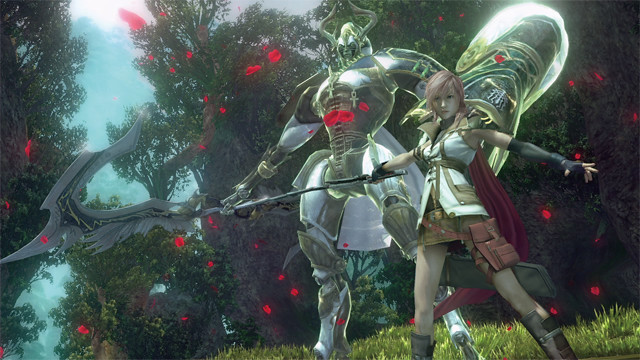
Like all of FF13’s Eidolon battles, you don’t have to defeat Odin to win, you simply have to fill his Gestalt bar. This is WAY easier said than done however. And because Odin is the first time you do one of these type of battles, it’s terribly overwhelming for a lot of gamers. It doesn’t make it very clear really what fills Gestalt bar unless you use Libra on him. Smacking him with loads of attacks won’t fill it up very fast – what fills it up fast is getting Lightning to heal Hope and by specifically doing combo attacks to hit Odin. Doing both at the same time is quite difficult, not to mention Odin’s attacks are devastating, and a lot of them are aimed at Hope who has lower HP.

I failed this battle many many times because just figuring out what to do was a task in itself, and then when you finally “get it”, it’s still a bastard. Odin has appeared in many Final Fantasy games and is usually badass, he’s certainly badass in FF13 but he’s so frustrating as a boss battle and that’s why for me this incarnation of him is the most memorable, certainly for boss fights anyway.

So that’s the end of Part 2. Come back for Part 2 tomorrow when I cross over the halfway point of the listing as we go from #30 to #21!

Click here for Part 3, counting from #30 to #21.
Click here for Part 4, counting from #20 to #11.
Click here for Part 5, counting from #10 to #1.
For the latest updates on my work, follow me on Facebook and Twitter here!

Thursday, January 05, 2012

Game Review: Final Fantasy XIII


Overall, Final Fantasy 13 is a great game with a complex yet rewarding storyline and an awesome battle system.


Final Fantasy XIII was released nearly two years ago here in the UK, in March 2010, and was released on both the Xbox 360 and the Playstation 3. It is naturally, the thirteenth major chapter in the critically and commercially successful Final Fantasy series. The game’s official sequel, Final Fantasy XIII-2, is to be released next month.

Just in case you’re not too familiar with the series, Final Fantasy games have been released since 1987, twenty five years ago, and are a set of RPG games that have for long periods of time become the most influential and widely celebrated role playing games of all time. Many recurring themes in the series are the using of magic and summoning monsters, the use of airships, travelling across a world, characters dealing with love or loss, characters defying the powers of fate, religion or apocalyptic circumstances and the inclusion of chocobos and moogles, two creatures the game series has made popular. The highest point in the series was arguably the release of Final Fantasy VII in 1997, which was released on the Playstation, which was met to universal acclaim and has sold more than any other game in the series, at over 10 million copies and is only second to Gran Turismo on the console. Since then the sales and reception of the Final Fantasy series has changed; some games sold more than others and some games were better received. Final Fantasy XI marks the first online RPG in the series, and was followed up by last year’s release of Final Fantasy XIV.

Final Fantasy XIII follows Final Fantasy XII (that being said, none of the major games are connected officially and are set in their own styles and game universes), which was met with a decent response, with the main criticism coming from the fact that the world was expanded across an immense terrain with in some cases very little linear direction and large amounts of battles followed by short spurts of storyline progression. What did Square-Enix do with Final Fantasy XIII in response to these criticisms?
"He's behind you!" Ah... I love pantomimes.
FF13 (I’ll now abbreviate to numerals) in comparison to FF12 does exactly the opposite in terms of the world terrain and linearity. The game is linear, to the point that you cannot travel back to previous areas at all, nor is there varied places to explore in each area. The game, it feels, almost holds your hand throughout your journey, which is completely different to FF12, a world where you can go to so many areas so early in the game, even if the storylines don’t require you to go there. FF12 and FF13 are complete opposites in terms of how the rails of the story go; FF13 glues your hands to the rail where as FF12 shatters the rail completely.

Moving onto the story, before I explain what the plot is, I’d like to just say that the storyline is very confusing and hard to follow first time round. It doesn’t help when you’ve entered a game in a fantasy world that uses three different terms in fal’Cie, l’Cie and Cie’th all the time and you barely have time to digest the terms and learn their meanings. It confuses the plot from the off and it makes the story hard to follow at times, unless you click straight away, something I personally didn’t do on my first run. The second run through the game was a lot easier mind, and the story on this run was much better to follow.

The story follows the theme of fate, and how these six playable characters are chosen as servants of the fal’Cie, the game’s equivalent of gods, to complete a task (called a ‘focus’) to destroy the world, and how if they fail in their task, they’ll turn into grotesque monsters (‘called Cie’th’). If they succeed and complete their ‘focus’ their fate is potentially just as bad, as they will be granted crystal stasis, for as long as eternity. The name given to these servants is the ‘l’Cie’, and they are capable of using magic, and therefore the general citizens of the land of Cocoon are afraid of them. It’s a harsh fate that is given to these six individuals, and it takes them all on an emotional journey of deciding to give up on their task, to embrace their task, to run away from it and try to shake it off, or try even, defying it. It’s a great storyline once you understand it, one of the best storylines in recent Final Fantasy titles in my opinion, and one I’ve enjoyed more than any storyline since FF9.

These six characters naturally all have different personalities and views on their situation. The main protagonist is Lightning, who’s sister Serah became a ‘l’Cie’ before the game begins, and at the start of the game turns into crystal stasis, having completing a focus that is unknown in task. Lightning, an ex-soldier, is seen as a very harsh character whose upbringing makes her take a bold and frank approach to these dire circumstances and often has the party she accompanies upset. Serah’s boyfriend, Snow, also is a main character, and only met Lightning days before the game starts and had a frosty reception from the ex-soldier, which leads to Snow often, get the brunt of Lightning’s frustrations. Snow himself, sees himself as a hero of Cocoon and uses his large stature and loud voice to carry him through his troubles of losing his girlfriend to crystal stasis and his refusal to accept his focus of destroying his home land. In an attack at the beginning of the game, Snow attempts to save a load of prisoned victims and the death of one particular person has significance to the plot. That is because it’s the mother of Hope that dies, who’s another main character. Hope has had a normal life on Cocoon and lives a life where Cocoon’s political pressures brainwash most of the citizens, especially when it comes to ‘l’Cie’ being hostile and basically, evil, so the despair that Hope goes through not only to accidentally become what he was thought to as evil, but to have to live with knowing who was arguably responsible for his mother’s death in Snow, leads to an interesting extension of the story.

The other three characters also have great story arcs; Sazh is a father whose son had also become a ‘l’Cie’ prior to the game’s beginning and has other issues too, but deals with them with a heavy heart but a happy smile. Sazh is an excellent character, definitely my favourite, and is probably the funniest character in the game. Fang is as forceful as Lightning is, yet shows a softer side to her much more often than the main protagonist does. She will do anything and everything she can to protect Vanille, who come from the same location in game and have a history together. Vanille is the hit-or-miss character of the game; she’s cute and bubbly and has all the traits of similar characters in Rikku of FF10 and Selphie of FF8, so you’ll probably either love her or she’ll probably either annoy you immensely. Vanille also operates as narrator of the game, and her significance to the plot is discrete but ultimately vital when the puzzle pieces all align. Without mentioning the main villain by name, the main antagonist in FF13 is absolutely fantastic, a much better villain than Vayne from FF12, and my favourite Final Fantasy villain since Kuja from FF9.

"RUN VANILLE! They're going to asplode!"
The game play has also dramatically changed this time round in comparison to FF12. We once again return to the ATB (Active Time battle) system used in most of the FF titles to date, but it’s a much-changed variation of it. The best way to describe this system is that it’s like the one used in FF10-2 but with much more action involved. So much action in fact, that you only control what is called a ‘party leader’, meaning this is the first Final Fantasy title where you can only control one character in battle, rather than the entire party. A usually very competent AI controls the party in support. Basically you can either use the battle system manually, where you can choose your actions, or you can use the very useful “Autobattle” command, which selects an option to you based on your enemy and any potential weaknesses, or in turn, any healing you may require if you are of the party support systems. But unlike a lot of the old traditional Final Fantasy titles, you have combos. You choose your commands either manually or automatically, and you can build your combo up to do multiple attacks in one go, in turn leading to a more smooth and sophisticated system which also looks good to watch and play. Your combos increase as the game goes on from two to six.

There’s more to add to this battle system. There’s something called a “Paradigm” system, where you can chop and change battle formations with different job titles. There are six different job titles, Commando, which uses mainly physical attacks; Ravager, which uses damage dealing magic, a Medic, which primarily uses healing magic, a Saboteur which weakens and debuffs enemies, a Synergist that buffs allies and the Sentinel who absorbs damage and protects allies. Towards the beginning of the game the characters start to acquire access from one to three of these titles and towards the end the characters can gain access to all six, although the three titles they acquire later can only be strengthened minimally. When the game is complete, you have full access to all six titles and can be strengthened fully. So the “Paradigm” system means you can mix these job titles to work in your favour, for instance if you have three characters you can have a Commando, a Medic and a Synergist; one character physically attacking, one character healing and one character strengthening the party. You can then change to a completely different system with the “Paradigm” system, to a defensive one, for instance having two Medics and a Sentinel gives you a lot of healing power and some defensive cover too. The “Paradigm” system really does battle tactics in a Final Fantasy game in a way that’s never been done before and I think it’s fantastic.

While you have these six job titles, naturally you have to strengthen them and strengthen your characters. This game doesn’t use the traditional levelling up system like most Final Fantasy games do, and instead lets you increase your character’s stats on something called the “Crystarium”. After battles characters earn Crystarium Points, or CP, and you use CP in the Crystarium to activate nodes that give you character abilities or stat enhancements, not too dissimilar to FF10. After certain segments throughout the game, you gain access to another level of the Crystarium, further advancing your characters abilities and stats. So you have the six job titles, if they’re unlocked at that point in the game, that you can increase your characters stats and abilities through, and in turn they make your characters stronger.

Final Fantasy XIII’s graphics are absolutely gorgeous. The motion videos are as great looking as any game on the new generation consoles and the landscapes of Gran Pulse, the other location other than Cocoon, in FF13, are utterly stunning. The characters look good, the enemies look even better and some of the bosses in this game, particularly the ones very significant to the plot later on, look tremendous, particularly the designs main antagonist. The sound in FF13 is as good as the series has always been and while the quality of the soundtracks of recent Final Fantasy games don’t match the amazing tracks of FF7 and FF9 in particular, FF13 does a decent job of getting the mood set for each location and event that occurs. I once again, prefer the soundtrack of FF13 than that of FF12, to compare.
FF13 on the whole is absolutely stunning, particularly Gran Pulse later on.
Now I’m sure you’ve noticed but I’ve compared FF12 and FF13 a lot in this review. There’s a simple reason why – they’re polar opposites of each other. Final Fantasy 12 concentrates a lot on the exploration of the world map, and lots and lots of battles. The story lacks in FF12 and its basic premises is stretched across the incredibly large open maps and battles. FF13 does the opposite. The game is so linear, and the cut scenes and story is to the brim in terms of depth and development. Once you get over the confusion of the storyline you’ll find a great tale to be told here, and while the ending is not as good as other titles in the series, you still get the satisfaction expected from completing a Final Fantasy game. But the linearity of FF13 is a problem. There are a lot of places in FF13 that you go to only once, and never to return. In fact, the game is split into thirteen chapters and you can only revisit the places in chapters 11 to 13. 3 out of 13 chapters are capable of revisiting. That’s pretty poor. And like FF12, there’s very few mini games, if any, in FF13 although there are one or two decent side quests. The game does open up replayability by giving you full access to each character’s Crystarium at the end of the game, for you to continue to develop your characters and take on the biggest and baddest battles in these side quests. And I said, you’ll probably enjoy playing this game a second or third time just because the chances are you’ll appreciate the great story more.

It is for these reasons why overall, FF13 for me is a great improvement on FF12, and my enjoyment of it is probably on par with FF10, although for different reasons. What keeps FF13 together is it’s great storyline and decent set of characters, combined with an ultimately unique battle system. Sure the game is really linear but in the end, you can get over that, especially as the areas that are revisitable are probably the most strikingly good-looking places in the game. Another flaw would be that I don’t like the fact that you only control one character in battle, I like taking a party of characters into a battle and using all of them to beat my enemies. But overall Final Fantasy 13 is a great game, with a complex yet rewarding storyline and a great battle system. If you want my recommendation whether or not to buy or rent it, well, look at the general consensus of what I and most other people have said, and make your decision from there. If you can get over the game’s flaws, you’ll find a brilliant game in FF13, its’ one of the best RPGs in recent years.

Rating: ****1/2 stars


For the latest updates on my work, 'like' me on Facebook here!