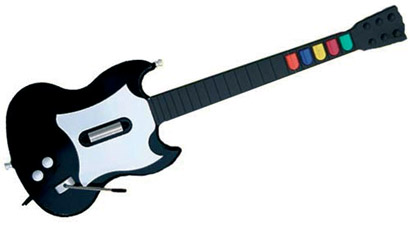
Hey there and welcome to another one of my Mixtapes. This is different however. This is the first time I've remade a Mixtape. Best of Teenage Angst II? Yes, because six years ago I made the Best of Teenage Angst. It was one of my first ever Mixtapes, possibly even the first. Click here to see it.
So why have I remade my Mixtape? Well I listened to it recently and looked at the list of songs, and I just thought it looked wrong. It looked a little dated in some ways; some of the songs were popular back in 2006 and have not really been as good. Obviously songs from the eighties live on, but modern songs die quickly, some of them do anyway. And also, I was looking at some of the songs and wondering what the logic was behind their selections? Johnny Mercyside of six years ago made some odd choices. For instance, why "Killing in the Name" by Rage Against the Machine? That song isn't a song about teenage angst. Is it a rebellion 'fuck you' song? Yes. But that's because they're sticking two fingers up at a lot of problems with the world. They weren't whining about things that weren't fair for kids. They were being adults. I could talk about other songs that aren't in the new list but I'd be here for a while.
So this is the NEW Best of Teenage Angst. New and improved. What is the logic behind the selections of these songs? Well either the lyrical content is a little immature, or aimed at young teenagers. Songs like "I Hate People" by Anti-Nowhere League is an example about how silly the lyrical content is. But then you have "I'm Eighteen" by Alice Cooper in here, a song that deals with the dilemmas of teenage life. "I'm a boy and I'm a man, I'm eighteen and I get confused everyday". So hopefully that explains it.
Don't know much about Mixtapes? Here are the rules.
A Mixtape is a playlist of a certain genre, band or era. The
list is generally 80 minutes long, the same length of a blank CD, with further
recommendations if some of the songs aren't to your taste. Remember kids,
downloading is wrong!
So here we go! Best of Teenage Angst II! Also, this
Mixtape is now available to listen to fully on YouTube so subscribe to me if you want to listen to it properly.
Orange Font - Artist was featured in 'Best of Teenage Angst I', but song has changed
So that's the new and improved Best of Teenage Angst! What songs can you think of that makes you think of teenage life, for good or bad? Comment below. Also do you think it's a better list of songs? Let me know. That's it from me, have a good day!
For the latest updates on my work, 'like' me on Facebook here!
Hey everyone, welcome to the seventh edition in a series of
reviews of a year in music. So far I have covered all the 2000s together as the
Noughtie series,
and so far monthly, the year 1999,
then 1998,
followed by 1997,
and 1996,
1995 and then last month, 1994.
Just in case you’re not familiar with it, here’s the format.
It will be done in five parts. I'll do a brief history of what happened in that
year, followed by my five favourite albums of the year, then what I think the
five best videos are. I'll then do a Top 10 most impactful (still refraining
from using the word important) songs from that year. To wrap it up, I'll do my
favourite songs in a mixtape format. So now that you know where I'm going with
this, let's get to it!
This is an important year for me personally. This is
probably the first year that I genuinely am unsure if I remember much that
happened when I was actually a four year old boy. I know for a fact that I
heard some of these songs when I was a little older, but as a four year old,
who knows? 1992 is a definite no that’s for sure.
On a minor note, this is my landmark 200th post on the site. Here's to 200 more!
Brief History of the
Year 1993 in Music
KoRn
form, becoming one of metal's greatest and biggest acts of all time.
Guns
'n' Roses end their tour in July. It's the last time the original band has
played together.
Depeche
Mode release the album "Songs of Faith and Devotion" and gets to
#1 in the US, the first alternative British act to achieve top spot across
the pond.
Daft
Punk form, transforming electro and house music forever.
Brit-pop
band Suede release their debut album and it becomes the fastest selling
debut album in the UK at the time.
In
pop, Michael Jackson is accused of child molestation, accusations that
were never disproved or proved and haunted the rest of his career.
My Top 5 Albums of
1993
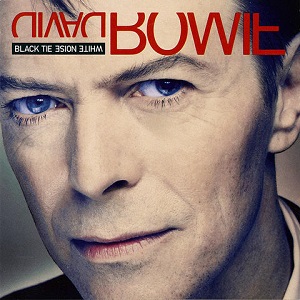
#5 – “Black Tie White Noise” by David Bowie
Released: 5/4/93
Rating: ***1/2 stars
Stand-out tracks: “Black Tie White Noise”, “Looking for
Lester”, “Jump They Say”
“Black Tie White Noise” isn’t David Bowie’s best work, in fact,
it was probably the beginning of the end for good quality Bowie efforts. While
I prefer some of Bowie’s mid nineties work to it (although as an album
“Earthling” is horrendous, “I’m Afraid of Americans” remixed by Trent Reznor
and “Little Wonder” were decent tracks), “Black Tie White Noise” is a good
middle ground between what was and what was to come for Bowie. In the eighties,
Bowie changed (yet again) his image and sound, and starting to merge into a new
wave sound along with bits of jazz, rhythm, blues and soul music (a lot of this
is in the fantastic instrumental “Looking for Lester”). He keeps certain parts
of those genres in this effort; put it this way, trumpets in this album are
aplenty. But there’s a certain ambiguity evident in this album, and that was
the next attempt of an image and music transition, and that was into industrial
music, inspired by the rise of Nine Inch Nails. It was ultimately unsuccessful,
but this transition between the eighties Bowie and the nineties Bowie, was a
decent effort. It’s not great but it is good, and it’s worth a listen if you
enjoy the many faces of Bowie, and if you like some or all of the genres
mentioned above.
#4 – “Pablo Honey” by Radiohead
Released: 22/2/93
Rating: ***3/4 stars
Stand-out tracks: “Creep”, “Anyone Can Play Guitar”, “Stop
Whispering”
Along with the newest effort “The King of Limbs”, this is my
least favourite Radiohead effort, but that’s not an uncommon opinion amongst
most fans of the band. “Pablo Honey”, the debut album, seemed confused about
its musical direction and influence, and ended up a mixture of indie, grunge, alternative
rock and the beginnings of Brit-pop. But it’s still a decent listen, and
“Creep” is still one of the biggest and best indie anthems of all time, Johnny
Greenwood’s almost lightning bolt sounding guitar is as iconic a sound in music
as anything in the past 20 years. But the rest of the album falls relatively
flat; they’re not bad songs but there’s barely anything great here either.
“Anyone Can Play Guitar” has some great snarling lyrics by Thom Yorke and “Stop
Whispering” has a nice melody and is the barebones basis on which most softer
Radiohead songs would sound like. “Pablo Honey” is a decent yet unspectacular
listen if you’re interested in the roots of Radiohead’s emergence.
I have a confession to make. I’m not that big on the
Smashing Pumpkins’ albums. I like the Pumpkins and have for sometime, but their
singles are usually very good, their albums are often a step downwards in terms
of quality. While my feelings on “Siamese Dream” are similar, the difference in
quality between singles and album tracks is a lot shorter. The singles are very
good, not quite as good in my opinion as some of the other tracks they were to
later release (like “Ava Adore” and “Bullet With Butterfly Wings”) but the
album tracks are pretty damn good. Very good in fact. One thing I would like to
say however; “Disarm” is a belter of a track and is the first truly stellar
Pumpkins song in my opinion. “Siamese Dream” is definitely an album to start
with, if you’re interested in getting into this band, that’s clear.
#2 – “Everybody Else is Doing it, So Why Can't We?” by The
Cranberries
One thing I keep doing when I’ve been going back in time to
review these years is forgetting the true quality The Cranberries have. The
thing is, I hadn’t listened to the band for so long because of personal
reasons; they were my father’s favourite band and I’m happy to say I’ve not
seen him for nine years. Let’s leave it at that.
But as for The Cranberries, I’ve slowly listened to these
albums again and remembered how good they were. “No Need to Argue” is my
favourite effort by the band, but probably on par in second place with “To the
Faithful Departed” is this cracker. It’s a great album, in the early to mid
nineties there was probably no other band consistently making great music
(Radiohead are a good contender mind). “Everybody Else is Doing it, So Why
Can’t We?”, the debut album, got the band some recognition before being shot
the Irish band into superstardom, with “Linger” getting lots of praise from
critics and it being a huge hit too. The rest became history, as The
Cranberries were to become THE Irish band at the time.
Huzzah! I can have my say on a Nirvana album! I’ve been
doing this yearly music review for 7 months now and my time has come!
I’ve always gone through phases in terms of what my
favourite Nirvana release is; it started off at Nevermind, as it did for a lot
of people. It then discretely went to Bleach, before I loved Incesticide more
than anything else despite it being a rarities and covers album. But for the
past three or four years it’s been In Utero, and I think it might stay that way
in all honesty. “In Utero” lacks the polish that Nevermind unintentionally has.
It’s funny to say that Nevermind has polish, but the album and its songs have
been played and talked about so religiously that’s how it feels. In Utero,
because it’s never played any where near as much, feels raw and venomous, and I
say that with praise. “In Utero” is Kurt Cobains “fuck you world” album, before
he unfortunately gave his life up because he couldn’t cope anymore. And it’s
bold, it’s brash, and it oozes excellence, “Scentless Apprentice” is possibly
my favourite Nirvana song as it contains everything that made the band great;
the excellent drums, the distorted guitars and Cobain’s wailing vocals. “In
Utero” is full of this and sounds as amazing in 2012 as it did 19 years ago.
It’s a true classic and is by far the best album released in 1993, in my
opinion.
My Top 5 Music Videos
of 1993
#5 – “Losing You” by Jan Terri
Okay, I’m kinda putting this in as a joke but to be fair,
there weren’t many ‘great’ videos in 1993. But this baby, seriously, you have
to watch it above. Jan Terri’s video for “Losing You” does everything bad about
making videos and crams it into one huge mess. She’s lip synching badly, she’s
wearing some pretty bad looking leathers, all she does in the entire video is
leave a hotel, go in a cab, ride her motorcycle and pose next to a sewage pipe,
then goes back home. And while all of this is happening, the whole thing looks
like it’s done on a camcorder, and the person filming keeps zooming either to
her face a little closely, or worse, away from her and to the skies… and then
back in her direction. It’s an incredible display of incompetence on camera and
that’s why it’s one of my Top 5 videos of 1993. Honest. No I’m joshing but you
seriously have to watch it, it’s very funny and disturbing at the same time!
#4 – “Cannonball” by The Breeders
It’s not the best of videos in terms of quality and artistic
movement, but nevertheless “Cannonball” is a distinctively memorable video. The
nice calm verses usually have the band playing and sitting in a bedroom, where
as the angry choruses tend to show the band in a frenzy. There are shots of
lead singer (and bass player of The Pixies) Kim Deal singing under water and of
a huge cannonball rolling down the street. As I said it’s not the flashiest
video, but it fits the song perfectly and grabs your attention at the same
time. Also, it was an early Spike Jonze effort, the man who would be one of the
best music video directors of all time.
#3 – “Big Time Sensuality” by Bjork
How can you not like Bjork in this video? She’s so cute! Set
in New York, the video was actually inspired bizarrely, by “Give it Away” by
the Red Hot Chili Peppers. Bjork liked the black and white video and how it
looked, and wanted it for this video. So the video is basically her singing and
dancing on the back of a large truck that’s moving through the streets of New
York. It’s not much more than that, but it’s still a striking video, and
Bjork’s facial expressions are great. It’s just one of those videos that is
hard to keep your eyes off. There’s not much else to say really.
#2 – “Heart-Shaped Box” by Nirvana
The video for “Heart-Shaped Box” is a visually stunning
piece of work. Kurt Cobain had his own imagination and imagery for how he
wanted the video to look and worked with director Anton Corbijn closely to get
it as close to the idea in Cobain’s head as possible. From what has been said
Cobain was really happy with the overall product and is probably his favourite
Nirvana music video. A lot of the video doesn’t seem to make much sense unless
you try to analyse it properly and has mixtures of a terminal man in hospital
going to a dream-like location and climbing up a ladder to a cross. There’s a
lot of references to the human foetus and birth as well, probably all from Cobain’s
widely reported anxiety of the birth of his baby daughter at the time. There’s
a lot more, a young girl dressed up as a member of the Ku Klux Klan and a large
woman wearing a costume that has internal organs painted on it. It’s just a
dream-like artistic masterpiece, one that shows the true visions of Cobain’s
complex mind, but for us music fans, it’s a truly stunning piece of work to
watch and try to interpret.
#1 – “Everybody Hurts” by R.E.M.
Not many videos are as perfect for the song they represent
as “Everybody Hurts” is. Explaining what happens in this video is simple, but
the imagery, the interpretation of what happens, is as strong a message as the
song itself. A huge traffic jam happens on a very long road, and throughout the
first two thirds of the video everyone’s thoughts are displayed on screen. Some
people are contemplating life, or what people think of them, or motives they
have that are too strong to be said in person. It’s a multitude of people with
different backgrounds all thinking different things, but all ultimately,
negative. All of a sudden everyone starts leaving their cars and walk off into
the distance.
The video is open to interpretation but to me, it’s all of
these people, deciding, “fuck it”, and moving on with their lives. It’s
everyone with different motives and problems, and they all decide to leave
their problems behind and “hold on”. It’s a strong video, one of the most
memorable videos of the decade and all time, and more than worth seeing if you
haven’t before.
The Top 10 Most
Impactful Songs of 1993
As I said, I'm NOT calling it the 'important' list, although
it's more than just popularity as well. Anyway, here are the 10 songs of the
year. It's an unbiased list.
#10 – “Big Time Sensuality” by Bjork
While “Play Dead” did get higher in the charts, “Big Time
Sensuality” for me is the song that really gave Bjork a strong following as an
artist, particularly in the States. “Debut” was a big album for the Icelandic
singer, and she was seeing some success already, but this song solidified her
as an artist of the future. It had the right mix of oddity and cuteness to be
expected by the small yet fiery lady, and the video was iconic for its time
too. Getting to #19, it set the tone for a lot of Bjork’s immediate future
releases, although she was naturally to change her style and artistic direction
as the new millennium was approaching. Still “Big Time Sensuality” was a great
track, and was a taste of what was to come.
#9 – “Today” by the Smashing Pumpkins
It’s amazing looking back to the year 1993 that “Today”
wasn’t the lead single of “Siamese Dream”, but “Cherub Rock” did. It was
debated what should be the lead single and Billy Corban used the latter, yet
it’s barely remembered or considered as an impactful Pumpkins song. “Today” was
a sleeper hit, and remains one of the Smashing Pumpkins’ finest singles for
both critical and commercial success. The relatively optimistic sounding lyrics
and music is in deep contrast to the suicidal tendencies that Billy Corgan was
going through and writing about when making this song. The lyrics are probably
intentionally ironic to the darkness that Corgan was engulfed in, and it’s
often got fans confused about what the song’s lyrics are about. Regardless,
getting to #44 in the UK charts isn’t that great, but it’s remembered more than
most of the songs that charted higher since.
#8 – “Cannonball” by The Breeders
It may have only got to #40 in the UK charts but this song
will live forever as one of the best indie songs of all time. The Pixies bass
player Kim Deal’s band only really had this one hit, although it didn’t chart
well, before she went back to the Pixies later on in her career. But what a
song it is. It’s a great track and as previously stated the video is excellent
too. “Cannonball” packs a lot of punch with it’s buzzing guitars and quietly
sung verses, and screams ‘girl power’ before the Spice Girls even existed.
#7 – “Insane in the Brain” by Cypress Hill
I’m very selective when it comes to rap, hip hop, dance,
techno and other non rock related genres, but this is a hip hop classic.
Cypress Hill have had higher charting songs but in terms of longevity nothing
comes close to how big this song is. It has many samples in it, and is actually
a diss song about how rapper Chubb Rock was mocking their music. Who would have
thought that it would become one of the most influential and highly regarded
hip hop songs of all time? It’s a cracker of a song and is favoured by fans of
many genres from pop to rock and metal. It’s that good a song.
I was debating whether or not to put this song in this list
being a pop song of sorts, but the band also produce dance music and are an
extension of the New Wave bands of the early eighties. Originally a song by the
Village People, the Pet Shop Boys took this song by the scruff of the neck and
made it their own. It’s not my genre of music but the fact that the song still
has a strong following nineteen years later, especially as a football anthem
says more than the fact that it got to #2 in the UK charts. Regardless of the
definition of the Pet Shop Boys representing any genre in particular, this song
is above that debate. It’s simply a classic.
#5 – “Walk” by Pantera
I’ve said it a few times but this list isn’t just about
success, it’s about longevity, it’s about the songs creating a legacy that will
more than likely live forever and become legendary tracks in music history. And
these credentials all fit “Walk” by Pantera to a tee. There aren’t many metal
songs in the past twenty years that are as universally as popular as “Walk”. It
was an instant classic, what with the amazingly heavy yet simple riff, the
‘walking’ riff as it’s known as that sounds absolutely badass. Then the Dimebag
Darrell guitar solo towards the end of the song completely contrasts the
simplicity of the main riff; it’s an incredible guitar solo. “Walk” only got to
#35 in the UK charts, but not many songs released in 1993 will be remembered as
fondly down the line, it’s just a true metal classic in every way.
#4 – “Linger” by The Cranberries
While “Zombie” is more likely to be the song that is most
widely associated with The Cranberries, “Linger” is a debated song to claim
that title as well. “Linger” was the band’s first major hit, getting to #14
here in the UK but it got higher in the Irish and US charts. It’s safe to say
that without “Linger”, The Cranberries probably wouldn’t be the band they are
today, and that is one of the biggest bands of the nineties, and probably THE
biggest band from Ireland in the past twenty years. “Linger” still gets decent
airplay today, along with “Zombie”, and they are both indie classics. I’m using
the word ‘classic’ a lot today huh? There are a lot of classic tracks from
1993, and here’s three more!
#3 – “Heart-Shaped Box” by Nirvana
Getting to #5 in the UK charts, this is Nirvana’s highest
charting single. Obviously a lot of the singles released off “Nevermind” made a
bigger impact and get more airplay, but “Heart-Shaped” box is still a classic,
and lyrically, one of Cobain’s finest efforts. Pressure was at an all time high
for Nirvana to replicate or surpass the legacy of “Nevermind”, and with the
release of “Heart-Shaped Box” and the album “In Utero”, I think Nirvana did as
good a job they could have to appease the fans and critics. “Heart-Shaped Box”
is another classic, a great song and one that like the band and Cobain himself,
will live forever.
Yeah, Meat Loaf. Most people either love him or hate him. I
lean towards the latter, especially musically, but you can’t deny the success,
the legacy and longevity this song has. I was torn between this and the song
below about what should be #1, they’re both huge huge songs for completely
different reasons. But this song in terms of grandeur is hard to beat, that is
in any song in any era of music. This song is just grand in every way. But it’s
funny how it all happened really.
In 1977 Meat Loaf released the highly acclaimed classic “Bat
Out of Hell” album with the music single of the same title. It’s gone 7 times
platinum here in the UK, 14 times platinum in the US and 24 times platinum in
Australia. While success was always there for Meat Loaf, he never reached those
heights, arguably ever again. But in 1993 he took a huge gamble. A really big
gamble. He made a sequel album called “Bat Out of Hell II: Back Into Hell” and
this was the main single release. It’s a big risk because not many sequels,
album-wise, are good in music. They’re often frowned upon. But this song, not
necessarily the album, but the song surpassed anything Meat Loaf did 16 years
prior, and helped Meat Loaf get the album platinum 6 times here and 5 times in
the US.
The song was a #1 hit in no less than 28 countries. That’s a
huge feat. The music video and the song still get played today more so than
most other songs of the nineties. It’s a true classic if there ever was one.
But the song below, the song I put as the #1 song of 1993 surpasses this song
in different ways.
#1 – “Everybody Hurts” by R.E.M.
No it didn’t get to #1 in 28 countries, in fact it got to a
decent #7 here in the UK. But this song is a modern heart wrencher. Aimed at
teenagers who are struggling with coping with the wears and tears of everyday
life and that they are not alone with their problems, “Everybody Hurts” did
more than that, it hit everyone in a way stronger than most people anticipated.
This song breaks genres and musical tastes. It’s more than a song about
teenagers struggling with their issues. It’s a song for the modern age, a song
about modern Western culture, where we all at different ages and social
backgrounds all struggle with life, for many difference reasons whether it’s
social, financial, emotional or mental issues. We all hurt. We all struggle.
And we all need to hold on. And that’s why this song continues to make an
impact now, nearly twenty years later and probably will for a long long time to
come. Everybody hurts sometimes.
The Year 1993 Mixtape
Just in case you didn't know by now...
"A Mixtape is a playlist of a certain genre, band or
era. The list is generally 80 minutes long, the same length of a blank CD, with
further recommendations if some of the songs aren’t to your taste. Remember
kids, downloading is wrong!"
So here we go! My favourite songs from the year 1993. Yes,
this is a biased list.
You can now listen to this playlist on YouTube! Just click here!
And there we go! The year 1993 in review! Next month
naturally I’ll be covering 1992 and continue my descend into music history.
What we your favourite songs and albums from 1993? Any other comments or
queries? Raise them below. Thanks for your time.
For the latest updates on my work, 'like' me on Facebook here!
Hallo. Welcome to another Mixtape. This is a personal Mixtape, because it's a topic that is purely biased from anyone's perspective.
Today I reveal my favourite debut singles. When a band is new on the scene they have to choose their first single very carefully. They have to hope that the song they release gets the ball running for the sake of their careers. If it flops or worse, is panned, it can destroy careers. It definitely can make a band's career a mountain to climb. But debut singles can work the other way too, it can make a career start brilliantly, but the success is short because they are then a one hit wonder.
Not familiar with the Mixtape? Here are the rules.
A Mixtape is a playlist of a certain genre, band or era. The
list is generally 80 minutes long, the same length of a blank CD, with further
recommendations if some of the songs aren't to your taste. Remember kids,
downloading is wrong!
No matter how the careers of the band's below went, these songs kick ass in my opinion. Enjoy my favourite debut singles!
And there you go, my favourite debut singles. I hope you like some of these, if not all. It's a heavy playlist but heavy is good in my opinion. That;s it from me, take care.
For the latest updates on my work, 'like' me on Facebook here!
On Monday and Tuesday this week I posted you The Rise and Fall of Guitar Hero, paying homage to the greatness and the unfortunate demise to one of my favourite video game series of all time. I posted the first half on Monday, which you can find here, and the second half yesterday, which you can find here.
But this post is about my favourite songs to play. Now, these songs aren't my favourite songs in the entire series, but a list of songs, proportioned across the six major titles, that are all fun to play if you have the knack for playing the game well. Now, my experience with Guitar Hero is that I'm a decent player, I can play all songs on "Hard" mode (bar two, which is "The Devil Went Down to Georgia" and "Through the Fire and Flames", both on Guitar Hero III), and a decent selection of songs on "Expert" mode. I have actually completed the first Guitar Hero game on "Expert", but no other. So, I can play a decent bit. So naturally, some of these songs are usually the harder tracks to play, but some are not, some songs, like "Love Me Two Times" by The Doors, aren't too hard, but are just so much fun to play.
But before I show you the list, let me explain what my Mixtapes are about.
A Mixtape is a playlist of a certain genre, band or era. The
list is generally 80 minutes long, the same length of a blank CD, with further
recommendations if some of the songs aren't to your taste. Remember kids,
downloading is wrong!
I do Mixtapes quite often on this site, so if you scroll down to the bottom of the page and use the tab "Mixtape" you can see other playlists I've created. But without further delay, here are my favourite songs to play in the Guitar Hero series!
And that's my Mixtape! I hope you've enjoyed all three parts of my Guitar Hero homage over the past three days. That's it from me for now, have a good night!
For the latest updates on my work, 'like' me on Facebook here!
Hey there, welcome to
a three part homage to what I call The Rise and Fall of Guitar Hero. Today I’ll
talk about The Rise of Guitar Hero, going through the first part of its history.
I’ll talk about the series, the games, and my feelings on them as we go along.
Tomorrow, part 2, is going to about The Fall of Guitar Hero, where I talk of
its decline, as well as the games and my feelings that contributed to its
demise. Part 3 will be put up on Wednesday, where I’ll be posting a Mixtape of
songs that are my favourites to play from each game in the series.
The Guitar Hero series was one of my favourite game series
of all time and in its peak, was extremely popular and has revived interest in
many rock bands of the past. Activision claimed the third game in the series
was the first title in the history of video gaming to hit $1 billion in sales,
which shows you the power the game had at one time.
Guitar Hero first started off as a vision from a company
called RedOctane, who saw potential in an earlier game series called
GuitarFreaks, which had relative success in Japan. Seeing potential in the
series, they decided to create their own game with their own format, hoping for
success in the States. They asked Harmonix, a game development company who have
created other music games such as Amplitude and Frequency, to moderate success.
An agreement was made between the two to produce this game series.
The idea was to have a guitar controller to replace the
control pad. This guitar controller would, naturally, be in the shape of a
guitar. Where the frets of a genuine guitar would be, were five large plastic
buttons. These ‘frets’ were colour coded; green, red, yellow, blue, and orange.
On the base of the guitar was a strum bar that could be lifted up and down, and
a whammy bar. The concept of the gameplay was for the respective colours of the
frets would represent different notes in the sound of a guitar, and on the
television screen, when you would see your respective coloured fret, you would
hold down the colour of the fret, and strum in motion with the timing. Getting
the timing with ten notes in succession would then double all your points.
Getting twenty notes in succession tripled your points, and thirty notes
quadrupled your points. That is the basic concept of Guitar Hero, arguably much
easier than playing a guitar itself, which gave it access to many people of
varying skill levels.
The original Guitar Hero controller.
There are other gameplay elements as well. If you had a long
note in a song (like, in the beginning of “Iron Man” by Black Sabbath), you
would simply hold down the respective coloured fret while the note is being
played. You could play chords, simply by holding two fret buttons at the same
time. Hammer ons and pull-offs were possible by pressing a series of frets in
quick succession to a certain section of a song. At particular segments in a song,
certain notes would have a white silhouette around them, and playing these
notes in succession gave you an ability called “star power”. Gathering large
amounts star power was fundamental in getting a high score in the game. To use
star power, you have to store enough of it first, and then, then you lift the
actual guitar controller ninety degrees upwards (or pressing the ‘select’
button on the controller itself), and all the notes would turn a glowing blue
colour. When star power is activated, all notes count for twice the score as
before. So if you hit over thirty notes in succession, you would have a
quadrupled points multiplier; but with star power, those points would be
doubled to eight times the original points. The whammy bar had its use too; if
you were in a series of notes contending for star power, if any of those notes
were long, you could use your whammy bar to start developing star power on the
cuff.
Naturally with star power and a points multiplier, this game
was very good at making it competitive to get the highest score. High scores in
video games took a turn by the mid-nineties, not many games used high score
boards, or used point systems. It wasn’t really until the mid naught, when
leaderboards on Xbox Live and the PS3 were developed to compare your score to
other people around the world when the point system gained a second wind. While
Guitar Hero was released just before
the seventh generation consoles became official, this really game did make it
competitive again to compare your scores with other friends. Another addition
is the rating of songs out of five stars, where successfully playing a song got
you three stars, but hitting more notes and getting multipliers gave you a
better chance of a four or five star rating.
As the original game didn’t have any licences to use master
copies of any songs, they created cover versions for all the songs on the game.
So with the guitar sorted, the gameplay elements created and the cover versions
developed, everything was rocking to get the game released. All that was left
really was to develop characters that the player could choose from. It was
important that these characters were varied, and covered many genres of rock
and metal, as there are so many subgenres of music that could be associated with
the game. For instance, for ‘metalheads’, Axel Steel was created, a very large
man with really big shoulders and long brown hair. In contrast, Johnny Napalm
was designed with punks in mind; he was a tall and slim topless man with a
Mohawk. One of the female characters was Pandora, a slim girl with dyed light
blue hair and was appealing for people into the gothic fashion, and genres
associated with that movement.
Johnny Napalm, the 'punk' character.
Everything was set! They released the game in the States on
November 8th, 2005, and was met with huge critical acclaim. No one
expected it to be the hit it was, with the soundtrack of cover versions praised
and the guitar controller. The original Guitar Hero controller was modelled
after the Gibson SG, a guitar used by Eric Clapton, The Edge, Dave Grohl,
George Harrison, Jimi Hendrix, James Hetfield, Tony Iommi, Keith Richards
amongst others. For me personally, the best thing about Guitar Hero was the
fantastic effort put into the order of the songs. The idea was that you would
have five tracks, and if you successfully play through them all, you’d unlock
five more tracks. The songs got more and more difficult as the game went on.
This is a formula used in most of the games, but no game has been more
successful at making the learning curve arced to precision as the original
game. Starting with “I Love Rock and Roll” by Joan Jett and finishing with
“Bark at the Moon”, the songs are for the most part simple yet great tracks
that begin to take a difficult turn towards the middle, and at the end are
songs with difficult riffs and guitar solos.
The game came out in the states in November ’05 and I caught
wind of it around the turn of the year, when the game was starting to feature
in many award listings. I completely forgot about it though as it wasn’t released
in the UK yet. It wasn’t until around March time, when my local Game store had
a playable demo. I gave “I Love Rock and Roll” a go and absolutely fell in love
with the game. I HAD to have it. I found out when it was being released, which
was April 7th 2006, and got a copy not long after then. I was
hooked. It was one of the most amazing video game experiences I ever had.
Playing these awesome songs, learning new ones, getting better at playing the
game, it was ecstasy. I managed to beat it on Easy within days. “Easy” mode
only allows you to use the first three of the five frets. I went onto “Medium”,
which made you use four of the five. I remember going all the way with ease
again, until I got to the penultimate track, which was “Cowboys From Hell” by Pantera,
an excellent song, and found it too difficult. After a lot of practicing I
finally beat it, and moved onto “Hard” mode, which was the first time all five
frets were to be used. The rest is history now.
The original Guitar Hero had some excellent cover versions
in the game, as there was no rights to any master copies, you have to give a
lot of credit to the team who made these songs their own. Some of the songs are
a bit off, like the person doing Lemmy in “Ace of Spades” by Motorhead, but
some of them are pretty damn good. The original “Guitar Hero” will always have
a place in my heart, the makers of the Guitar Hero series have improved certain
elements of the gameplay as the series has gone on but the original has
developed a certain charm to it, and it’s a game that I’ll always stick on once
in a while. If I were to review the original Guitar Hero it would get ****1/2
stars from me, as there were things that could have been improved, and were.
Let’s move on.
Guitar Hero I has a charm no other game in the series has.
After the success of Guitar Hero, it was inevitable a sequel
was to be made. And the team were straight on it, with Guitar Hero II being
produced and released here in the UK seven months after the first, on November
24th, 2006. I remember those months quite clearly. I remember being
on MySpace on a Guitar Hero message board, and I, along with thousands of
others, were excited to hear news on what songs were to be put on the sequel.
We all made radical and personal suggestions in anticipation. Some songs were
announced early, like “You Really Got Me” by Van Halen and “Freya” by The
Sword. I remember “Misirlou” by Dick Dale being announced, and I marked out
pretty bad. I’m not the biggest Dick Dale fan, or Pulp Fiction for that matter,
but knowing such a complicated guitar track being put on the game was awesome.
I remember not getting the game until probably Christmas, as I could afford it
when it was released. In the month between then, I vividly remember going on
YouTube to view how hard “Misirlou” was going to be and being in awe over how
much strumming you would have to do on the harder difficulties. I also remember
this time my local GameStation having the complete copy of Guitar Hero II on
display for customers to try out, and actually unlocking a lot of the songs
myself, just to play “Misirlou”. It was as difficult yet epic as I had
imagined. Another highlight for me in the second entry in the series was one of
the bonus tracks. I had never heard of Homestar Runner or Strong Bad, but
playing “Trogdor” changed all that. I didn’t really understand why the song was
funny or how I’d missed it, being someone that had been into this type of
internet humour for some time, but doing some research on it not long after
playing the song showed me the wonders of Strong Bad, and SBEmail. If you like
internet humour then give SBEmail a go, Strong Bad is one of the funniest
online villains of all time.
Anyway, Guitar Hero II picked up from what Guitar Hero
started. In this game it was possible to play songs on bass guitar, and you
could play co-op with a guitar and a bass player. One of the most important yet
subtle changes to the game were the hammer ons and pull offs being much easier
to do this time around. I’m not sure why it was difficult to do it in the
original, but the change was thoroughly appreciated universally. Some new
characters were added this time round, like Lars Umlaut, a Nordic death metal
player, and Izzy Sparks, who represented the hair metal movement of the
eighties. There were also three note chords, which were simply strummed by
holding three of the five frets. Guitar Hero II’s soundtrack wasn’t as good as
the original Guitar Hero’s, I mean there were some great additions like “Beast
and the Harlot” by Avenged Sevenfold, “Free Bird” by Lynyrd Skynyrd and “War
Pigs” by Black Sabbath but on the whole there were a lot of songs that just
didn’t feel belong, or weren’t as fun to play as others. In the original game
there were songs that I wasn’t too fussed about, but they were fun to play and
you could understand their inclusion into the game. Guitar Hero II didn’t
always have songs that felt that way. Still, it was a solid effort, one I rate
at ****1/4 stars.
The seventh generation consoles were starting to become the
main force around this point, and if Guitar Hero was to keep remaining relevant
they had to move onto the new consoles. Their first venture was to move Guitar
Hero II to the Xbox 360, and they did this in April 2007. The PS3 and Wii don’t
have this title in their collection. To mark this occasion, the makers made a
special guitar controller for the Xbox 360 version, which was shaped like the
Gibson Explorer, which was used by the likes of Clapton again, The Edge again,
Billy Gibbons and Paul Stanley. This controller however was criticised as the
base model was smaller than that of the PS2 controller, and was harder to hold
therefore.
The Guitar Hero II controller, modelled after the Gibson Explorer.
In July 2007, the final Guitar Hero by Harmonix was
released. This spinoff title, “Guitar Hero Rocks the 80s”, paid homage to many
artists associated with the eighties. It was met with mixed reviews due to the
soundtrack not being as good as the previous games, and also because it had
fewer songs, yet was the same price as the other titles. I bought this myself,
but soon sold it when I completed it, as it just wasn’t a very good set of
songs, even from the eighties.
Some time between the release of “Guitar Hero II” and “Rocks
the 80s”, Activision gained acquisition of RedOctane, and MTV Games bought
Harmonix. They decided to release another sequel, and sought out Neversoft to
develop it. The Guitar Hero series was an incredible mainstream machine by this
point, and was on a high never experienced before. With the muscle of MTV, they
were able to finally start using master recordings when available. With
Neversoft they had an experienced and valued developer, who had given the world
the Tony Hawks series. They built “Guitar Hero III: Legends of Rock” from
scratch, with their own designs and ideas behind the game.
The game was released in October in the US, and on November
23rd, 2007 here in the UK. With a massive 73 playable tracks, it was
a huge collection of songs. They had some great tracks on the set, and many of
them were master recordings, like “One” by Metallica, “The Number of the Beast”
by Iron Maiden and “Paint it Black” by The Rolling Stones. The game was a huge
project, much bigger than the other two games, and it had the feeling of a
gaming giant about it. Playing “Guitar Hero III” and “Guitar Hero” were similar
experiences, naturally, but there was a different feeling this time round.
Playing “Guitar Hero” back was like going back to an old house you moved away
from, which was smaller than your current house. “Guitar Hero III” had many
pros and many cons. On the whole, I’d say this is probably my favourite title
in the series, just because there are so many excellent songs on the track
listing. At this point I was able to play many songs on “Expert” and the third
in the series is most certainly the most difficult game. They really put all
their efforts to testing the hardcore Guitar Hero gamers to the max, “One”,
“Number of the Beast” were incredibly difficult songs to play. But it was one
of the additional features that made the game so difficult.
Slash makes an appearance in the 3rd game, he also featured heavily in the games marketing and artwork
The main inclusion for “Guitar Hero III” was the new battle
feature, which was available in two-player as well as in the main storyline. In
this game, the idea is that star power is replaced by battle power ups, which
are used to hinder your opponents ability to play the song successfully, like
crank the difficulty, or make one of the frets disabled temporarily. This
battle feature, as mentioned earlier, is used in the main storyline. In the
main storyline there are two famous musicians, Slash and Tom Morello of Rage
Against the Machine. You must ‘battle’ them to progress. At the end of the game
the final battle commences, against Lou the Devil. This battle is incredibly
difficult. The song, a metal cover version of “The Devil Went Down to Georgia”
(an incredible cover version may I add) is played, and playing against the
Devil is just ridiculously difficult. It’s so difficult that personally, I’ve
never beaten him on “Hard” mode; it’s only one of two songs that I can’t beat
on that difficulty in the entire series. The other song? Oh, that’s in this
game too. When you beat the game, you unlock the hardest song in all of the
Guitar Hero games, “Through the Fire and Flames” by DragonForce. The song, when
done on Expert, has nearly 4000 notes in it, and is eight minutes long. Having
scoured YouTube, it looks like the first evidence of someone actually completing
the song with 100% of the notes is in this video below,
which was put on YouTube on June 3rd, 2008, eight months after the
game was released. The guy has a rival now, and the two have been trading
records for the most points in the song. Me? As I said, I can’t even beat it on
“Hard”!
So, one of the pros for the game is that it has a huge
selection of great tracks. Another pro is that the design of the game and its
characters was definitely an improvement. The cons? Well, I said there were
many great tracks to play, but this title definitely has many duds as well.
Because there are a total of 73 tracks, there are definitely songs on the game
that haven’t really got much justice to be on there. None more so than “When
You Were Young” by The Killers. I’m not saying it’s a bad song, but when this
game is called “Guitar Hero”, and the entirety of the first verse has NO guitar
in it at all, it shouldn’t be in this game. You’re just sitting (or standing
there), for an entire verse, with no game play at all. It’s stupid. A similar
experience also occurs in “Miss Murder” by AFI. These songs just shouldn’t be
on this game. Another con was the difficulty of the game, as I said earlier,
the game was definitely aimed at the more skilled Guitar Hero fans but they
didn’t really make the game that accessible to new players. The beautiful
learning curve of the original Guitar Hero was definitely gone by now. But the
biggest con in this game is all the plugging and advertisement in the game. It
takes about 90 seconds in the beginning of the game for all the companies, and
there is a lot in the game too, none less than the stupid “bom chicka wow wow”
girls. Nevertheless, this was a solid entry, and the pros definitely outweighed
the cons, and I’d give the game ****1/2 stars again, as I said, I usually play
this entry over any other.
I
call this part The Rise of Guitar Hero. Tomorrow I’ll be back with The Fall of
Guitar Hero. I hope you’ve enjoyed this half of the story and I hope you come
back tomorrow with the second part. On Wednesday I’ll be putting up my
favourite songs to play. I hope to see you back here tomorrow pronto! Have a
good night.