Showing posts with label macintosh. Show all posts

Tuesday, February 28, 2012

Game Review: Super Meat Boy

If you don’t lose your head over the difficulty, Super Meat Boy is an awesome homage to retro 2D platformers.
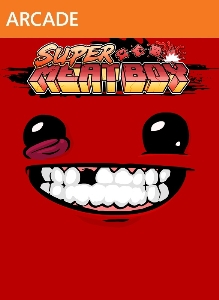
Super Meat Boy was released sixteen months ago on the Xbox 360 Live Arcade and was produced by Team Meat. It’s also seen releases on the PC, the Mac and on Linux since. It’s a 2D platform game and pays homage to the old school genre in general, particularly Super Mario.

Super Meat Boy is the sequel to an online Flash game called Meat Boy. Meat Boy was released on cult gaming and humour website Newgrounds three and a half years ago. Newgrounds is a website where many animated videos and flash games are posted. Meat Boy was a huge success on there and had over 8 million hits on all internet media. It was then decided that the success of Meat Boy could possibly be found on console gaming, so for the next two years hard negotiating, contracts and production were made to release Super Meat Boy. Team Meat contact all three major console gaming companies. Sony were not interested, and Microsoft showed a little interest. The most interest came from Nintendo. Microsoft made a large surge in the end for interest in the game, and a nice contract was made for the release on the Xbox 360 Arcade. Due to contractual obligations, it was to be released on the Xbox 360 first and lots of blood, sweat and tears went into the game, as well as a lack of sleeping hours to get it released on time. So much effort went into the game in the end that the game ended up being too big for Nintendo’s WiiWare, so they had to pull out, as Nintendo were not interested in a physical release for the game. So it ended up out of the three consoles, to be Xbox exclusive, and has since met major critical and commercial acclaim. I’m sure Sony regret their lack of interest now.
This is not going to end well...
Super Meat Boy follows a very simple story line. You play as Meat Boy, a red square with pixels for eyes and a very animate mouth, and small limbs. His girlfriend, Bandage Girl has been kidnapped by the main antagonist, Dr. Fetus. It’s such a simple storyline and the creators are emphatic on this, due to it being a strong homage of the simple storylines in the late eighties video gaming, particularly Super Mario. There’s no extended plot really, you as Meat Boy follow Dr. Fetus through over 300 levels to try and save the girlfriend, Bandage Girl. No further plot is needed either.

The game itself as mentioned earlier is a 2D platform game. To finish one of the 300+ levels, you start off at the far left of the level and have to make it to the end of the level, where Bandage Girl is waiting. You control Meat Boy and run and jump your way through obstacles to reach her, only for Dr. Fetus to take Bandage Girl to the next level. The game is split into 20 levels for the most part, “chapters” as they call them, where at the end you’ll have a Boss level where you have to once again either find Bandage Girl at the end of the level, or more often than not, run away from the boss themselves. Minor story continuation is usually shown between each “chapter” you visit.

Meat Boy himself is a square piece of meat. It sounds quite disgusting, and it is in theory, but the fact that the game is in 2D means nothing is really shown, the game is for the most part probably a 12+; the game itself shows very little that’s graphic or unsuitable for children but there are small references here and there that aren’t suitable. For instance Dr. Fetus quite often likes to stick his middle fingers up at the screen or Meat Boy, but those subtle things aside it would probably class as suitable for children in honesty. Due to the fact that Meat Boy is a piece of meat, whenever he runs, small trails of blood follow him everywhere he goes, once again it sounds quite horrible but it’s all pixelated and is fine once you get over the initial observation. Whenever he runs or moves, small squishy sounds follow him, to emphasise the piece of meat that he is as well. This paragraph is here to tell you that yes, these things are present and if it offends you not to show your children if you have any, that’s understandable, but for the most part it’s absolutely fine for children, if they don’t understand these things.

To control Meat Boy, you use the D-pad like always, and that lets you move Meat Boy left or right on the screen. To jump, you press the “A” button, and you can also jump off walls, multiple times, so you can jump from wall to wall to wall if you’re in a short space. You can also run by holding the “X” button while you move. To jump across large spaces you have to hold the “A” button while jumping. It’s very simple really.
The intro to Super Meat Boy is homage to Street Fighter. If you play the game you'll know what I mean.
But what makes the controls so amazing is how tight everything comes together. Have you ever played “Super Mario” back in the day, and the controls were hard to get your head around when first playing? There’s none of that while playing Super Meat Boy. The controls are incredibly tight; when you stop moving, Meat Boy stops moving. If you time everything correctly, you’ll jump, skid, run and drag against the wall (hold the D-pad direction against the wall to drag) as you are supposed to. The controls in essence, are what bring everything in Super Meat Boy together.

Because the controls are so tight, that usually means everything you do on Meat Boy is to your touch. There’s no blaming the game for bugs or the controls being poor. It’s your fault. And that’s quite frustrating in some ways. Why? Because this game is hard. It’s very hard. It’s really really hard! Team Meat worked very hard on making this game fun to play, but also challenging. There are over 300 levels in this game, but completing the first 40 is in some ways a challenge. But this game is a game of trial and error, you’re supposed to die, and die a lot, to be able to beat the level. Dying is only half the fun, because once you beat a level in Meat Boy, especially later on, it’s some achievement. You have unlimited lives, and the levels are short, and this equation makes for a fun yet frustrating game. You have to time things to an absolute tee (as I said, if you don’t, it’s your fault) to beat levels, especially later on

The levels for the most part take around half a minute to complete, but to beat each level it usually can take a lot longer. But don’t let this put you off, as I said, it’s difficult but the fact that you can try again and again instantly means you get a second go straight away. It’s the trial and error part of Super Meat Boy that makes it fun. If you were to flawlessly play Super Meat Boy it would be boring, trust me. Also, you don’t have to play the levels in order. They are however, as mentioned earlier, split into “chapters”, and to unlock the next “chapter” you’ll have to beat the boss in the previous one, and to unlock the boss of that chapter you have to beat a certain amount of levels. But if you get stuck and frustrated on a certain level, you can skip it, temporarily anyway, and come back to it another time.

There’s other ways to play Super Meat Boy. If you complete each level exceptionally quickly, you get an A+ stamping on the level. Doing this means you also unlock the “Dark World” version of the level. The “Dark World” version of the level is an even harder variation of the original level, meaning the difficulty of the level is increased even further! The “Dark World” levels are usually in design the same as the original level, but certain elements are usually added to increase the difficulty; either more obstacles are put in place to avoid, or certain platforms are shorter or not there at all, making the level harder to cross.
The boss battles are exceptionally challenging, but in a fun 'trial and error' way.
There are other characters to play as in Super Meat Boy, but all require unlocking. Most characters are unlocked by collecting plasters. Plasters are found on certain levels, usually in a difficult-to-reach section of the level, and the idea is to collect this plaster on the level and complete the level at the same time. Collecting a certain amount of plasters unlocks characters individually. All the characters bring something to the table; Gish plays almost identically to Meat Boy although he’s slower, but the main thing he can do well is stick to walls with exceptional grip, making him perfect for the levels in the game that are hard in this department. Jill has horns on her head and can stick to ceilings, while Tim can’t run at all but can turn back time three seconds, in case you do a mistake or fail to get a bandage or a key in the level.

Not all characters are unlocked by collecting plasters. Some are unlocked by finding warp zones on selected levels. Warp zones are great; they’re usually the same game but even more retro than the style the game is in. They’re usually thee levels of a much more pixelated version of the game, usually harder to complete and worse yet, you only get three lives rather than the unlimited lives you get in the main games. Beating certain warp zones unlock characters, and some even pit you as the character you’re about to unlock, rather than Meat Boy.

The game’s soundtrack is great. It’s not exceptional in terms of its quality, but it’s not supposed to be, the music is there simply to support the game, not to overshadow it. The music is often atmospheric to the level’s that are being played, and there’s also a lot of retro style music, especially for the warp zones. The sounds are also great, as mentioned, the squelches that are heard when Meat Boy runs or dies are perfect, and the guy who does the emphatic shouting of certain events (like “Super Meat Boy!” and “Warp Zone”, similar to the Street Fighter guy) are great too.

Overall Super Meat Boy is well worth every penny if you like retro games, it does the old 8-bit and 16-bit games of old complete justice. If you don’t lose your head over the difficulty, it’s well worth your time. I’d recommend you try the demo out, which is quite fleshy in itself and if you like that, get the full game. Just remember that the game is made for you to fail before you succeed, which is the way games were made in the eighties anyway. So if you don’t lose your head over the difficulty, Super Meat Boy is an awesome homage to retro 2D platformers and well worth a punt if you like Xbox Live Arcade games.
Rating: ****1/4 stars
For the latest updates on my work, 'like' me on Facebook here!

Tuesday, August 09, 2011

Game Review: Portal 2

Portal 2 is an incredible experience that tests your brain whilst being gut-wrenchingly funny at the same time.

Portal 2 was released a few months ago, and is the sequel to the multi award winning game from 2007 by Valve. The original game, initially part of The Orange Box (which included three Half Life games and another game called Team Fortress) was a very short but detailed FPS/puzzle hybrid that was considered more as a demo than a real game by the creators. However with its excellent and original game mechanics and its underlying storyline where you slowly figure out that everything is not quite as it seems at Aperture Science, was met with such strong praise by critics and even more so by fans that Valve probably felt forced to make a sequel. The ending of Portal was definitely open to interpretation to what happens next, and the questions of how the hell things came to pass in the original game definitely left fans wanting more. So Valve responded to the plea of fans in a way only they can – update the original Portal game to have an extended ending where Chell, the main character, gets dragged away by bots and to build an alternative reality game where players can start to piece some of the story together. The alternative reality game eventually leads to the official announcement of Portal 2 in the late spring of 2010. Plans were for the game to be released before the end of year, but it got postponed to the April of this year.

Before I talk about the sequel let me explain the game mechanics of Portal, in the event you’re not familiar with them. Portal, as explained earlier, is a first-person shooter merged into a puzzle game. It’s a truly unique experience, in the respect that instead of shooting bullets out of your gun, you’re shooting portals. And the purpose isn’t to kill people or aliens, but to use your portal gun to manoeuvre through level after level. If you shoot a portal at a wall, you can go through that portal and end up somewhere else. Later on in the game you get a dual portal gun, and from that point onwards your gun’s purpose is to shoot one portal in one place, and another to a location you can’t reach easily, to walk through the first portal and you come out of the other. This innovative game mechanic, which also combines the laws of physics to fly through portals, gain speed, and therefore gain air for long distances, became the staple of the game. Other elements are large cubes, which are predominantly used to put on buttons (usually further in a level) and also laser beams which activate switches for advancements into a level. There are enemies later on, which take on the form of turrets, which you can pick up or use your portal gun to dispose of. These all form Portal 1’s gameplay, which was a distinctive practice, yet a very short game.

So what’s changed in Aperture Science? And what of GLaDOS, the AI behind all the testing in the original game? What have Valve done to improve on Portal 1, is the game any longer than the original? How much of the gameplay from the original features in the sequel? Portal 2, unlike the original, has two gameplay modes, the single player game and the multiplayer game. I’ll talk about the single player mode first, which starts off an unidentified amount of time after the first game. Chell finds herself in the middle of what is insinuated as a potentially apocalyptic situation, where she finds herself ‘training’ how to deal with such extreme cirumstances. The training is basically simple tests not too dissimilar to the ones from the beginning of Portal 1. In fact, the first room you smash through is an exact replica of the room you start in, in the original game, albeit much older, worn out and with mould and nature growing through the walls. If you’re familiar with the original game, you’ll find this a nice welcome back to the series, but also becoming easily aware of the fact that, this time, things have changed. Aperture Science, with GLaDOS gone, has definitely had better days.

From the beginning of the single player mode, you find yourself attached to a little circular bot with a blue eye named Wheatley, who is very nervous and extremely comical. Wheatley, who is voiced by the fantastic Stephen Merchant from Extras, does an absolute astonishing job on his voice acting debut. Wheatley is basically your guide through certain segments of the beginning of the game, providing you with very funny moments, advice and storyline progression along the way. It doesn’t take long before you’re reunited with GLaDOS again, and to avoid spoilers, I’m not going to talk about how that coming together takes place. I will say however, it’s quite the reintroduction into the game. There are a few other characters later on in the game, which mostly have minor interaction with the player, that are all voiced well, whether it’s a human or a bot. It’s difficult to explain any other part of the storyline without spoiling anything, pretty much everything that happens in the game is a follow up of what happened prior, so all I’ll say is that the total storyline product is fantastic, one of the best told stories of recent times, and you’ll definitely enjoy the ride.
Portal guns, rainbow cubes and lasers. That's some party.
There are a few subtle tweaks to the gameplay, most notably being silhouettes where you have placed portals. I never thought about that as being a weakness in the original game, but this delicate touch shows that Valve have thought about even the slightest of shortcomings from Portal 1. Another example is that your cube, which is gray but has blue hues on its centre parts now lights in yellow if it’s placed on a button. As I said these simple improvements were not really a hindrance on the first game, but its inclusion is so subtle and welcome it really does show how much effort has been put into the game so that it’s an improved experience.

As well as the game mechanics from the original more elements have been added to the game to flesh it out, once you’re reunited with GLaDOS you start using a secondary cube, this cube changes the direction of a light beam (the original cube merely stops the beam) which adds a new layer of puzzle making.
Another added feature are the aerial faith plates – where you are literally flipped in the air to another side of the room. Multiple faith plates are used sometimes, where you flip in one direction, then another, and then another. You can portal mid air and get to new areas this way.
In the second half of the game you start using even more added features, most prominently the three gels; Repulsion, Propulsion and Conversion. Respectively the blue Repulsion gel lets you bounce across its surface, and the greater height you fall onto it, the higher you’ll bounce off it. The orange Propulsion gel let’s you run across it at high speeds, giving you a nice lift if you go over a ramp, and so on. Finally the white Conversion gel is spreadable across most surfaces, and you can place portals on this gel regardless of where it is spread, so if you have a surface that can’t be portalled (is that a word?) on, spray this gel on it and you can now place that portal on that surface. These three gels make up the second half of the game, and adds much variety to the gameplay.
The last major feature are the Excursion Funnels that are added to the last quarter of the game. These funnels, which can be reversed, let you travel through them across the entire terrain if portalled (I’m telling you, that word will be in the dictionary soon) elsewhere. The combination of the funnels and the gels add even more complexities to the game, which ante up the enjoyment factor immensely.
To your left is McDonalds, to your right is Burger King...
I haven’t really talked much about Portal 2 on a visual level. The graphics are great; I mean they’re not the most polished graphics in the world, but the art direction and the designs are definitely up there with the best. In the early parts of the game you see that Lab Rat’s artwork is still scrawled all over the walls and these drawings continue to add intrigue to the series as well as look good. The fact that some of the early levels are exact replicas or at least similar to the original levels of the first game adds nostalgia, and the fact that these test chambers are rusting and wearing out definitely adds to the game visually. Without spoilers once again, one thing I’ll say is that you’re not contained to these test chambers for too long, and the levels change as you get further in the game. These new areas and new designs are also designed very well.

We spoke of the voice actors and their incredible job earlier, but the sound production in general is top notch. The original Portal is not a game renowned for its fantastic music (apart from the track “Still Alive) but Valve need to be commended for both the original and the sequel for their production. No, there is no soundtrack full of excellent rock or pop tracks or anything like that, but the ambient music more than adds to the atmosphere in Portal 1 and continues to in Portal 2. There are many hidden Lab Rat dens, similar to those in Portal 1, and the music changes ominously when you find them. There are also small clips of music when you use the propulsion and repulsion gels, as well as the aerial faith plates, and these small clips of music add to the dynamic instruments you’re using, a more than welcome addition to the game.

I haven’t really spoken much of the multiplayer game. Pressure was put on Valve to make a multiplayer experience with Portal and they have delivered very well here. The developers claim that half the game is the single player mode and the other half the multiplayer but that’s not quite true, you can complete the single player mode in a good 8 to 10 hours of gameplay, where as the multiplayer takes a good 3 or 4 hours. Multiplayer puts you in the position of two robots, specifically designed by GLaDOS to be able to go through tests that are deemed far too difficult for humans to do. So instead of putting one human through the gauntlet, she puts two bots through, and worst case scenario is that they fail and GLaDOS simply can rebuild them to start again. That’s the basic synopsis of multiplayer mode, although there is a nice little reward at the end. Multiplayer is pretty much what you would expect it to be, two players with their own set of portals, going through a level. It feels more like Portal 1 than Portal 2, as the levels, especially in the beginning, are relatively short and sweet (where as Portal 2’s maps get quite long towards the end). They do get quite difficult later on, where timing is at the essence of both player’s to get the job done. The intention with multiplayer mode was to give you an experience where you communicate with the person you’re working with without the use of a microphone, particularly online. The idea is that your robots can’t speak to each other, so you and your partner shouldn’t either. They can communicate however, with the use of their body language. For instance, you can use the D-Pad to pinpoint a section of the map for your partner to ‘look’ at. Another thing you can do is set a 3 second timer, to help you do a task at the same time. These actions, while they feel relatively old school (and you can’t help but want to use the microphone if you have an annoying player you’re partnering online), make an experience that is actually in today’s modern technology world, feels different. The two bots also have charming personalities, and you can get your bots to hug each other, high five, dance, or you can be cheeky and place a portal underneath them and kill them comically. It’s all in good fun and GLaDOS also takes part, usually in a disapproving way once in a while.
You just can't help hurting your partner in Co-op mode. That's what happens when he steals your last Rolo though.
Portal 2 is an absolutely amazing experience. For me, it’s one of the best games ever created. "Portal was a test bed. Portal 2 is a game", Doug Lombardi told us. He wasn’t wrong. Portal 2 is a game that can compete with anything in terms of its overall value. It’s charming, it’s fun, it’s laugh-out-loud funny, it’s got a story made from gold, and it’s got one of the best character sets in video game history. The learning curve is spot on, and while some of the puzzles are challenging, they’re never off-putting. I wouldn’t say the game is flawless but it’s as close to flawless as they come. Some nitpicky issues are that there are a quite a lot of loading screens and while they don’t deter from the game too much, they’re frequent enough to note. Other than that they could have probably had some form of online leaderboard or possibly a bit more online play, maybe in a competitive competition, but these once again are possible additions in the future and don’t make the game any worse as a lack of inclusion.

I’m serious when I say; Merchant deserves every video game voice acting award available for his role as Wheatley. There’s so much passion, so much comedy, so much character put into the role that it’s stands out so well. Fans came into this game drooling over the idea of seeing GLaDOS again, what with Ellen McLain doing such a great job in the first game; Stephen Merchant and Wheatley steal the show. All the characters are great and they all have fantastic one liners, some of the best one liners in video game history I’d say, and all the characters can be funny at some point but as I say, Merchant steals the show and deserves the most praise.

To wrap up, Portal 2 is the game of 2011. It’s one of the best games ever made. It’s just an incredible experience that tests your brain whilst being gut-wrenchingly funny at the same time. It's that funny. And that’s all we want in a game right? To be tested mentally, and to feel like you’ve come away from a video game smiling. And you will with Portal 2, it’s just a game that’s more than worth smiling over. I started working on this website just over a year ago and I give Portal 2 an unprecedented review rating, in terms of this website alone.

Rating: ****3/4 stars

Saturday, December 18, 2010

My Top 10 Games Featured on the GameFAQs.com Game of the Decade List

I hope you've been enjoying the Game of the Decade list as much as I have. It got me thinking of all the good games that have come out in the ten years that have passed. I think the 128 games that have been chosen are really good, kudos to GameFAQs for that. I thought I'd do a list of my favourite ten games from that list. Just to note, this is only from the competition that is currently under way, there are other games I love that aren't on the list at all (World of Goo should have been chosen dammit!). Anyway, onto the list...

#10: Shadow of the Colossus (PS2) 
It's just been knocked out of the competition just less than 5 hours ago. I've just wept my last tear. This game is probably the most unique on the entire list. You just have to experience it to understand. A game with no standard enemies, just bosses? And it not only works but also became one of the greatest games ever made? Impossible. Just the scale of these enemies makes the game worth playing; it's just such a mind-blowing experience.

#9: Silent Hill 2 (PS2/XBox/PC) 
This game has possibly my favourite ending of all time in any game. It's a beautiful ending, well one of the endings you can get anyway, as you can multiple endings! It's probably my favourite Silent Hill game too, with the third not being far behind, this game was just a masterpiece from start to finish, storyline wise. The controls were a bit clunky once in a while, but you can ignore that with all that was good about this game. It's truly a phenomenal experience.

There's very few things in video games more fucking scary than Pyramid Head from Silent Hill 2.


#8: Pokemon Gold/Silver/Crystal (GBC) (Read my review here)
It's my favourite game in the Pokemon series; it's the game they got the most positives out of. The addition of colour, the night/day time, the breeding, going back to the original game's world... but the main thing they got right was how many Pokemon they had. The original 150 was great, the next 100 added onto it were also good, but then it just went overboard with every other game that has since been added. I've also done a review for the game, it's a bit old now but you can see it on this site if you're interested.

#7: The Legend of Dragoon (PS) 
I was surprised to see this game on the list as it got mixed reviews by critics. But the fans that liked this game loved it so that's power to the people for you yo! Yes, this game had flaws, and many consider it to be Sony's flopped Final Fantasy game, but it does enough right for it to be more than enjoyable. It's got a decent storyline, some of the graphics look great (whilst other parts look awful) and Lloyd was a good villain. But the best thing I liked about this game was the combo attacks, it was hard to get at first, but once you got it, it was a lot of fun.

#6: Final Fantasy X (PS2) (Read my review here)
I've probably spent more hours on this game than any other on this list. FF10 had its great moments, I can't criticise it for its commercial value, and it’s the last game in the series that was universally popular. I had great times playing it, but it just lacked something. I don't know what that something was, but it just felt inferior to some of the previous games. Anyway positivity is needed for this list! Final Fantasy 10 was very good in nearly every department, a great storyline, beautiful graphics that still hold up well today, a good battle system, and one of the most kick ass characters in FF history in Auron.

#5: Left 4 Dead (X360/PC/Mac) 
I'd just like to say, I hate FPS games. I can't stand them. They're always the same, there's just no telling the difference between each game that's out there. Apart from Left 4 Dead. L4D caught me by surprise. The main reason is its multiplayer game, it's just so much fun to play online. I love being the infected; it's just so entertaining. I'm actually quite obsessed with playing this game, I just can't put it down despite it being a bit dated now, and a sequel has also been made. That's the sign of a great game, that you'd play it over more recent games that have come out.

Man, there's very little more satisfying than being a Boomer on L4D.
 
#4: Plants vs. Zombies (PC/X360) 
Speaking of addictive games, the most addictive of all is PvZ. Not a great deal of people have played this but those who have, get addicted. This game is so easy to play but so hard to master, and to top it all off it's funny as hell. Seriously, if you've not played this game, download a free trial, and then spend your hard earned money on getting it when you find out how awesome it is.

#3: Grand Theft Auto: San Andreas (PS2/PC/Xbox/Mac) 
I don't know why this game has been overlooked so much in the competition. GTA3 came out, it was ground breaking, but had flaws. Vice City came out, improved those flaws but felt a bit too gimmicky, with it being in the eighties. GTA4 just went overboard in many ways, no matter how slick it looked. But San Andreas, San Andreas expanded everything that made the previous games great, and didn't go too far like GTA4 did. It also has the biggest and most interesting map to boost. GTA San Andreas got the best of all worlds and what I think is the closest to perfect the GTA games will get.

#2: Resident Evil 4 (GC/PS2/PC/Wii) 
And the award for most improved series award goes to - Resident Evil! I'm a huge Resi fan actually, but after Resi 2, the two follow-ups in 3: Nemesis and Code: Veronica decreased in quality for some reason. Capcom knew they had to do something to revamp the series. And this is what they did, and man, what a game Resi 4 is. It's just a brilliant game; I've not played an action game and had as much fun as I have playing this. I bought it, without thinking it was going to blow me away like it did. It's sometimes nice to not anticipate than it is to over anticipate (which is actually what I did with Resi 5, but that's a different story).

One of the best moments of Final Fantasy IX, Vivi and Quina... get married?!
#1: Final Fantasy IX (PS) (Read my review here)
And now we come to my #1. The people who know me well aren't surprised but I suppose as a GameFAQs list maybe you are. Other FF games were immensely more popular than this, 7, 8, 10, 12 are all more popular. But this game to me is the closest you will get to a perfect RPG, I mean, it has some minor flaws but I've never enjoyed a game as much as this. Remember, this is my list, and we're all different. But this game just oozes character, it's got everything what I want in a game, from it being fun to play, for the story to be both happy and sad, have characters I can relate to, it's long enough for me to get sucked into without ever getting bored, it's got an amazing soundtrack. It has everything. It frustrates me how much people overlook this game, but in a certain way it makes it more special, as I feel like it's my game.

And there you go, my favourite 10 games featured from the 128 chosen by GameFAQs. This is my list obviously, and I'm not claiming these are the best 10 games of the decade, nor are they my favourite 10 (although not many others would penetrate it mind!), but I just thought it'd be interesting to narrow down the 128 to my particular taste, and see the results. I didn't have a masterplan, I just chose the games I liked and chipped it down to 10. I hope it was interesting nevertheless!

For the latest updates on my work, follow me on Facebook and Twitter here!